4 sailors on doomed 1845 Arctic voyage identified
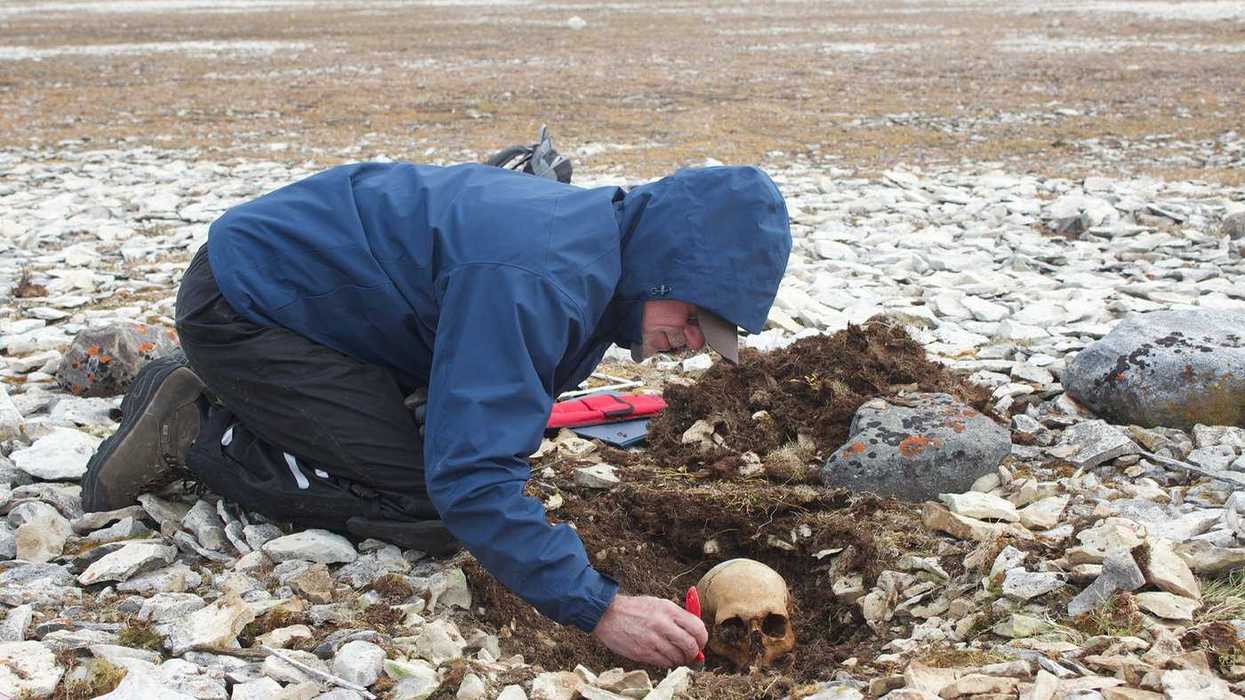
Four more members of a doomed 1845 Arctic expedition have been identified with the help of DNA testing, a Canadian research team says, including one sailor whose remains had been shrouded in archeological intrigue.
The discovery appears to solve the mystery around the remains of Harry Peglar. His documents, one of the few written records from the fateful British voyage to the Northwest Passage, were found on a body wearing clothes that did not match his rank, sparking theories about whether the remains belonged to Peglar or another sailor.
The researchers say they used genetic samples to confirm the remains did, in fact, belong to Peglar, the only sailor from the HMS Terror to be definitively identified by DNA analysis -- and the only one thought to have died alone.
"There's a lot of pieces to that puzzle, but once and for all, about 166 years later, we finally put that one to rest,” said Douglas Stenton, an archeologist and adjunct assistant professor at the University of Waterloo.
The other three sailors identified in Wednesday's paper sailed on the expedition's other ship, the HMS Erebus. Their remains were found along what's now known as Erebus Bay on Nunavut's King William Island, about 130 kilometres away from Peglar, whose remains were located by an 1859 expedition dispatched to search for the lost voyage.
The two ships, trapped in ice for almost two years off the island's coast, were deserted in 1848 by the surviving 105 sailors who walked in some cases for hundreds of kilometres toward the mainland in a failed search for help. All of them died and archeologists believe some resorted to cannibalism, though the remains identified in this latest research showed no such evidence.
The wrecks were discovered in 2014 and 2016, renewing interest in the expedition.
The team behind Wednesday's paper includes researchers from University of Waterloo, Lakehead University and a self-described hobbyist genealogist from Saskatchewan. They used DNA samples recovered from skeletal remains to pinpoint matches with living descendants who are related to the sailors through a direct, unbroken paternal or maternal lineage.
One of those three sailors was John Bridgens, a subordinate officers' steward born September 1818 in Woolwich, Kent. He first went to sea as a musician in 1829, at 11 years old, and volunteered for the expedition led by Sir John Franklin at 26.
Among his descendants is Rich Preston, a journalist with the BBC, who said it was "a huge surprise" to learn he was a match.
"I used to work on a genealogy show for the BBC that traced people’s fascinating family stories, and so to discover that there’s such an interesting tale in my own family’s past feels very exciting," he said in a statement.
The other two sailors identified were William Orren and David Young. The same team had previously identified two other sailors on the HMS Erebus.
The findings are detailed in a pair of papers to be published this week in two academic journals, Polar Record and Journal of Archeological Science: Reports.
This report by The Canadian Press was first published May 6, 2026.
By Jordan Omstead | Copyright 2026, The Canadian Press. All rights reserved.