Halley's Comet Debris Will Be Illuminating The Night Sky This Week & Here's How To Watch
Bringing in up to 60 meteors per hour. ☄
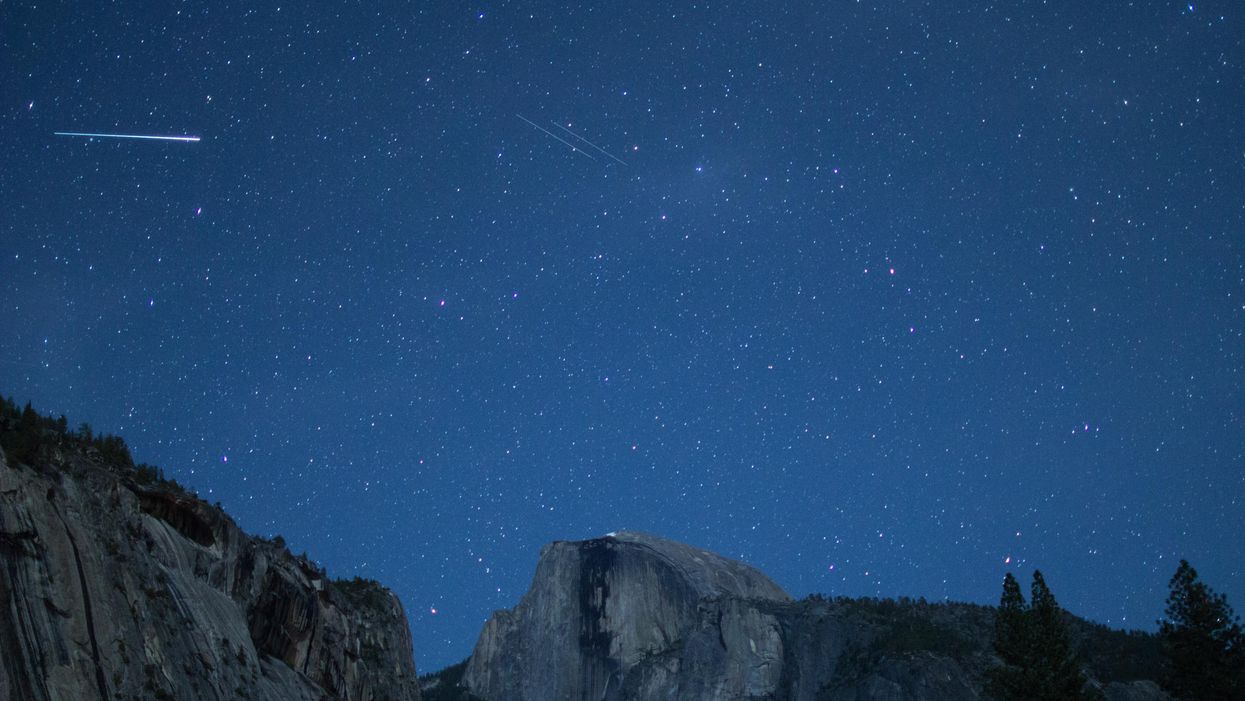
This week is shaping up to be an exciting one for outer space lovers thanks to a meteor shower made up of debris from Halley's comet.
Eta Aquarid meteors, which are fast-traveling meteors left behind by the comet, will be streaking across the night as Halley passes through the inner solar system for the first time this year, bringing in between 30 and 60 meteors per hour under the right conditions.
Editor's Choice: NASA Just Released Unseen Celestial Gems Taken By The Hubble Telescope For Its Birthday
The meteor shower is expected to peak during the pre-dawn hours of Thursday, May 6, and the show is expected to be particularly spectacular this year thanks to the waning crescent phase of the moon, meaning there won't be much light interference preventing you from viewing the meteors.
For the best viewing conditions, you'll ideally want to be in the southern hemisphere in a spot far away from big city lights and laying on your back with your feet facing east, where you will possibly spot up to 60 meteors per hour.
There's no reason to be disappointed if you're in the northern hemisphere, as the shower will still be visible if you follow the same viewing instructions, although you'll likely only see about 10 meteors per hour. You might also catch a glimpse of an "earthgrazer," which is a meteor that skims the Earth horizontally, leaving behind an extremely long and colorful fire trail.