Alberta to do away with twice-a-year time change
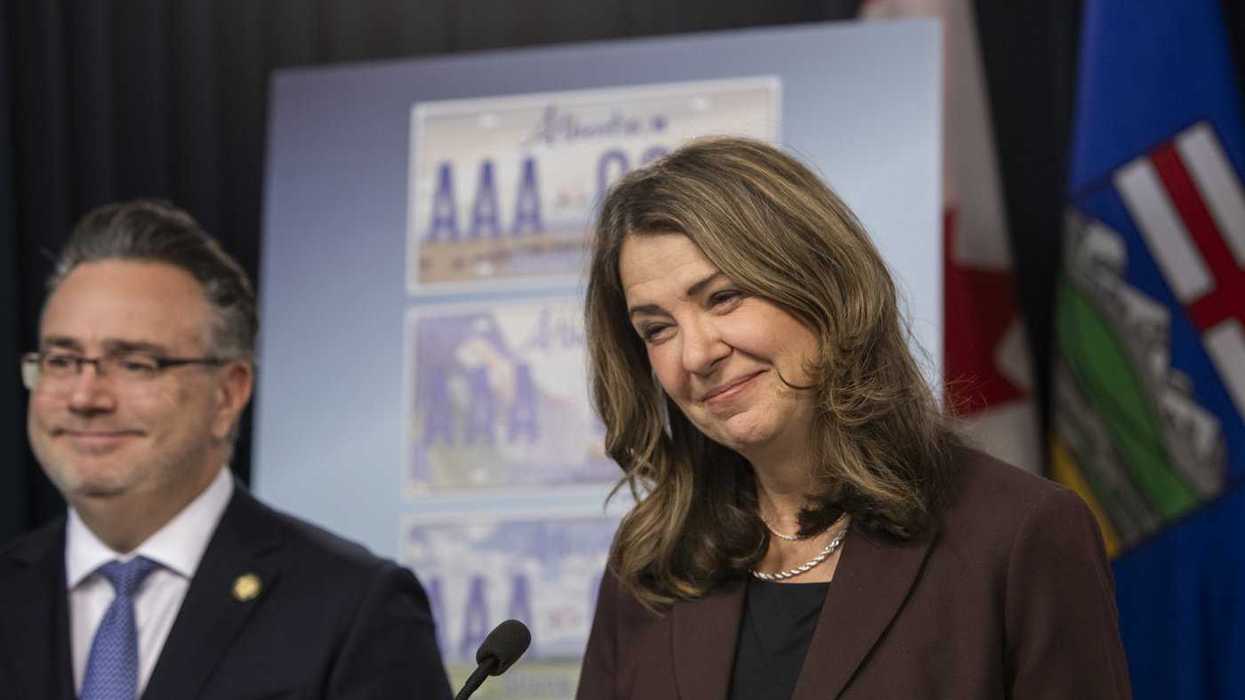
Premier Danielle Smith's government says Albertans will soon be ditching twice-a-year clock changes.
Service Alberta Minister Dale Nally confirmed Monday the province plans to stick with daylight time year-round.
"We'll be moving forward with having an extra hour of daylight in the evenings," he told reporters in the legislature.
That means Albertans would stay on the current time and no longer move their timepieces back an hour in the fall or forward in the spring.
On a practical level, it means that there would be less daylight for Albertans in the mornings during the winter but more light late in the day.
The change is expected to be made in legislation coming later this week.
Smith announced last month the government was consulting on time change, after British Columbia said it was staying on daylight time permanently.
"I kind of like more sunlight at night, and I think most people do, too, because we are on daylight eight months out of the year," she said at the time.
"Going to standard (time) 12 months of the year would be a big adjustment for people," she said.
She added that B.C.'s shift raised questions about whether Alberta should be aiming for consistency across western provinces.
As it stands, Alberta is set to revert to standard time on Nov. 1.
The changes are likely to affect businesses, transportation and even Albertans' health.
Many medical experts and organizations, including the Canadian Sleep Society and the Canadian Sleep Research Consortium, have said permanent daylight time could result in negative health outcomes, including sleep issues.
They advocate for permanent standard time, in part to avoid the negative health effects of clock changes, including an increase in heart rate and blood pressure, and disruptions to the immune system and metabolism.
However, proponents, such as the B.C. government, say extra daylight in the evening would align with when more people are active, improving overall well-being.
The issue has been hotly debated and voted on for decades in Alberta, and Smith has previously mused about putting the issue on a ballot herself.
Five years ago, a referendum question was put to Albertans to keep daylight time year-round, but it failed by the narrowest of margins — 50.2 per cent to 49.8 per cent.
When asked what's changed since then, Nally pointed to other jurisdictions that have ended time changes or, like the Northwest Territories, are considering the move.
"We're squished between two provinces who no longer change their clocks, so the facts on the ground have changed," said Nally.
"We were of the opinion it was time to stop talking about it and to take some action and get 'er done."
Alberta Opposition NDP Leader Naheed Nenshi told reporters the move is nothing more than a performative distraction from challenges in health care, the cost of living and a controversy over the government's decision to redraw electoral maps.
"There was a referendum, and Albertans said no, and now the premier is unilaterally putting it in," Nenshi said.
"This government is so entitled that they believe that they can get away with doing anything as long as the winds are blowing in that direction and it distracts people from the really horrible things they're also doing," he said.
Nenshi declined to say which side of the debate he stands on, instead saying the government should be listening to Albertans' opinions and experts on the issue.
If legislation passes and Alberta sticks to daylight time year-round, the clocks won't change, but times will change in relation to other provinces.
It means B.C. will be one hour behind Alberta year-round while Saskatchewan and Alberta will always be on the same time.
Alberta would be on the same time as Manitoba in winter and one hour behind it in summer. However, that could change as Manitoba Premier Wab Kinew has recently mused about going on one clock year-round.
The change would mean much of Ontario and Quebec would be one hour ahead in winter and two hours ahead in summer.
For most of the Atlantic provinces, the change would put Alberta two hours behind in winter and three hours back in the summer.
This report by The Canadian Press was first published April 20, 2026.
By Lisa Johnson | Copyright 2026, The Canadian Press. All rights reserved.