All Of Canada's Travel Restrictions Are Ending & Here's Everything You Should Know
It's happening, travellers!
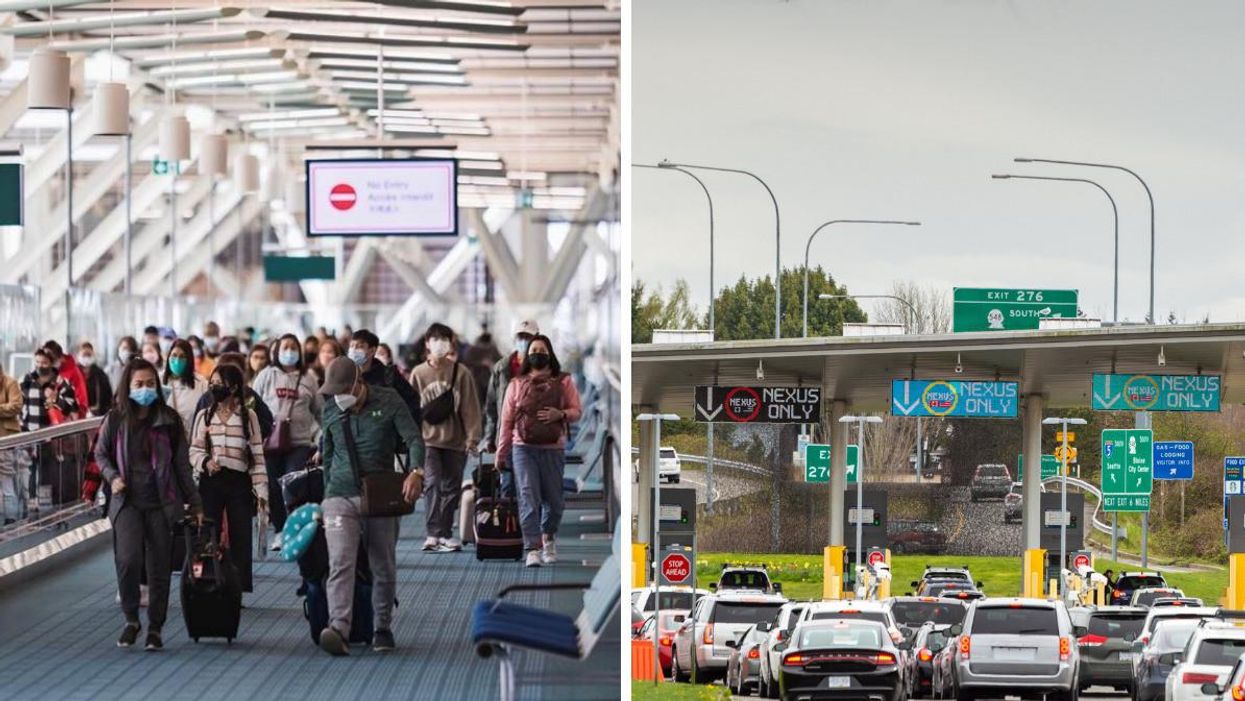
Travellers in the airport. Right: Cars at the Canada-U.S. border.
For the first time in over two years, travellers will face no COVID-19 travel restrictions in Canada.
On Monday, September 26, the federal government confirmed rumours that travel rules in Canada would be scrapped starting on Saturday.
Speaking during a press conference, Transport Minister Omar Alghabra announced, "We are removing COVID-19 measures that remain at the border."
It means as of Saturday, October 1, travellers will no longer be required to prove their COVID-19 vaccination status, use ArriveCAN or undergo random testing on arrival in Canada.
This applies to Canadian travellers returning home as well as international visitors entering the country. It applies to those travelling via land, air and sea.
Alghabra also confirmed that passengers on planes and trains in Canada will no longer be required to wear face coverings or masks on their journeys, regardless of their vaccination status.
Restrictions will also be lifted from cruise ships, the transport minister confirmed. This includes vaccine requirements, COVID-19 testing and mask wearing.
Global News reports that the decision to let the existing travel measures expire as scheduled was made last week, with Prime Minister Justin Trudeau giving the plan the final go-ahead.
It comes after months of calls from travellers, industry leaders and local government officials to fully reopen the Canada-U.S. land border and airports without any restrictions.
Canada Dropping All COVID-19 Border Requirements #shortsyoutube.com
So, what happens now?
Until October 1, Canada still requires all travellers to continue to use the ArriveCAN program to share their vaccination status and travel plans.
Additionally, mandatory random testing will remain in effect until Saturday, with airport passengers legally obligated to take a test within the required time frame if selected.
The federal government first implemented travel rules at the Canadian border in March 2020, during the early days of the COVID-19 pandemic. At the time, Justin Trudeau and then-President Donald Trump confirmed the border would close to all non-essential travel.
Since then, travel restrictions of varying degrees have remained in place, with measures sometimes causing disruptions in airports and at the land border.
It is not yet clear whether officials in the U.S. will also drop their travel measures on October 1, at the same time that Canada is expected to.
This is a developing story. Check back for more details.
- Here's What Vaccine & Mask Requirements Are At 11 Canadian ... ›
- Canada Has Changed Its Flight Refund Rules & It Just Got Easier To ... ›
- Here's Everything Changing At Toronto Pearson Airport As Canada Drops Travel Restrictions - Narcity ›
- Canada Morning Brief: 8 Things You Need To Know For Sept. 27 - Narcity ›
- CBSA Union Says There Could Be 'Significant Delays' At The Border When Restrictions Are Lifted - Narcity ›
- Canadian Official Says NEXUS Is 'Being Held Hostage' & The US Is Using 'Heavy-Handed' Tactics - Narcity ›