Canada Pension Plan payments for January 2026 go out soon and rates just increased
A little extra money is coming your way this month. 💰
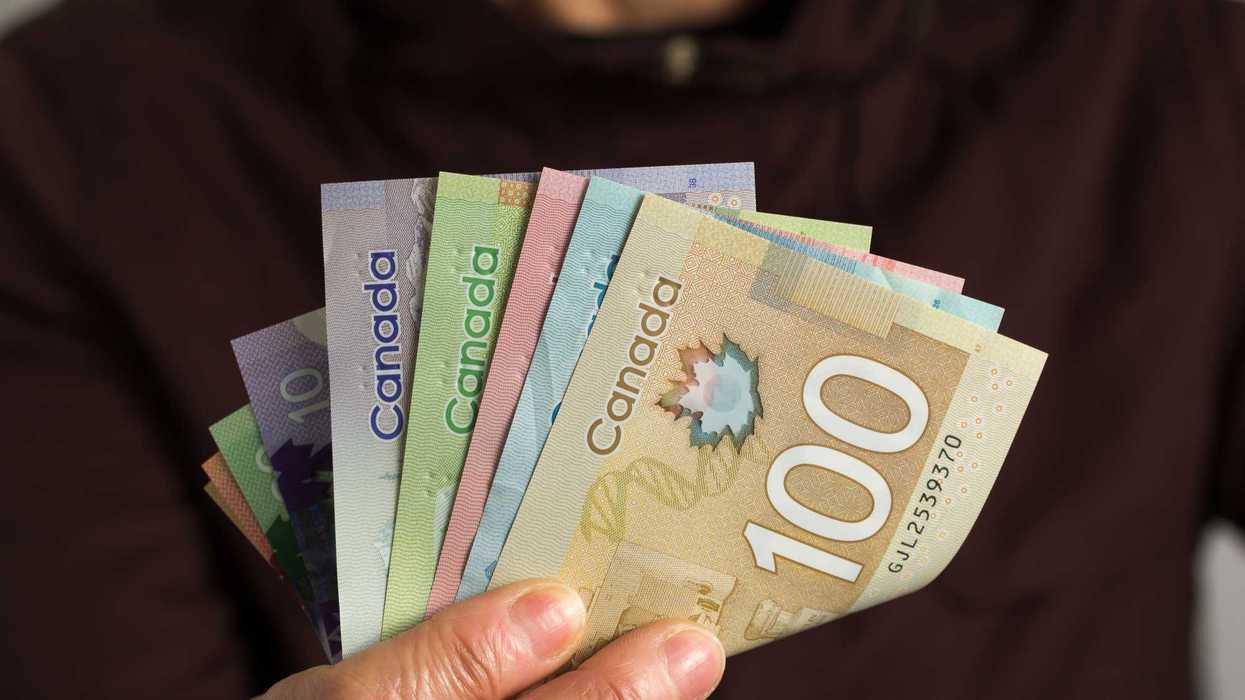
Canadian retirees will see increased CPP payments in January 2026.
If you depend on monthly government payments like the Canada Pension Plan, the new year brings some welcome news: benefit amounts just went up, and your CPP payment for January is right around the corner.
Starting this month, CPP payments are 2% higher across the board, thanks to an annual adjustment tied to changes in the consumer price index. That means your first payment of 2026 will reflect the new, slightly higher rate.
This increase applies to all types of Canada Pension Plan benefits — retirement pensions, disability support, survivor payments and children's benefits included.
Service Canada automatically applies these cost-of-living adjustments every January, so there's nothing you need to do to get the higher amount.
And if you're also receiving Old Age Security, that benefit is increasing as well, giving you a boost from two sources this month.
READ ALSO: Canada is increasing a bunch of benefits soon — Here's how much more you can get in 2026
Here's everything you need to know about your January Canada Pension Plan payment — including the increased CPP payment amounts, who can get them and exactly when your deposit will arrive.
How does the Canada Pension Plan work?
The Canada Pension Plan is a federal program that provides monthly income to people who've contributed throughout their working years. If you've ever earned a paycheque in Canada (outside of Quebec), you've likely paid into CPP through automatic deductions.
Those contributions add up over your working life and turn into a stream of payments when you retire or become eligible for other benefits. You can claim CPP as early as 60, though starting before 65 reduces what you'll get each month. The full benefit kicks in at 65, and if you hold off longer, your monthly payment grows — but only until you hit 70.
Once you begin collecting, your payment is guaranteed for life and won't decrease. Each January, Service Canada adjusts CPP for inflation, so you'll see small increases like the one that just took effect this month.
Who is eligible for the Canada Pension Plan?
You can receive CPP retirement benefits if you're at least 60 years old and you've made at least one contribution to the plan. Most people who've worked in Canada meet this requirement without even thinking about it.
In addition, if you've gone through a divorce or separation, you and your former partner can divide what you've each contributed during your time together, which could boost your monthly benefit, or even help you qualify if you didn't contribute on your own.
You also don't have to stop working to collect the pension — you can earn employment income while receiving CPP between ages 60 and 70. Keep contributing during that time, and you could qualify for the post-retirement benefit, which adds a little more to your monthly total.
CPP disability and survivor benefits
Beyond retirement payments, the Canada Pension Plan offers several other benefit types that are paid out in the same deposit.
Post-Retirement Benefit: If you're working and already collecting CPP between the ages of 60 and 70, you can earn an extra monthly payment. This benefit reflects the additional CPP contributions you're making while employed.
CPP Disability Benefit: This provides income to people under 65 with a severe, long-term disability that prevents any type of regular work. You'll need to show sufficient CPP contributions and provide medical documentation proving you can't work.
Post-Retirement Disability Benefit: Designed for those who become disabled between 60 and 65 after they've already started receiving their CPP retirement pension. It fills the gap when you no longer qualify for the regular disability option.
CPP Survivor's Pension: When someone who contributed to CPP dies, their spouse or common-law partner may be entitled to survivor payments. The monthly amount depends on the deceased person's contribution history and the survivor's age.
CPP Children's Benefits: Monthly payments for children whose parent has died or is receiving CPP disability. These continue until age 18, or up to 25 as long as they're a student.
When you qualify for multiple CPP benefits, Service Canada automatically combines them into one monthly deposit.
How to apply for the Canada Pension Plan
If you're eligible, you can start receiving CPP anytime between the ages of 60 and 70. Starting earlier means smaller monthly payments but income right away, while waiting secures you higher payments for life.
Once you've decided when you want benefits to begin, applying online through your My Service Canada Account is the quickest route. The whole process takes just a few minutes.
If you'd rather use a paper form, you can download the CPP application, fill it out and mail it to Service Canada or drop it off at your local Service Canada office.
Online applications are processed in around four weeks, while paper submissions can take up to four months, so going digital speeds things up considerably.
How is the Canada Pension Plan calculated?
The size of your Canada Pension Plan payment depends on a few main factors:
- The age at which you start your payments
- How much and for how long you contributed
- Your earnings throughout your career
Choosing to begin at 60 can reduce your monthly benefit by as much as 36% compared to what you'd receive at 65. If you wait past 65, you'll get up to 42% more if you hold out until 70. Once you start, your base amount is locked in for life and only changes through the annual inflation bump.
Higher lifetime earnings and consistent contributions mean a bigger monthly payment. Gaps in your work history or years with lower income can bring that number down.
Service Canada may exclude certain low-income or no-income periods when calculating your average. This includes years spent caring for young children, managing a disability or facing financial hardship.
Working while collecting CPP before 70 lets you earn the post-retirement benefit, which increases your total monthly payment.
For a personalized estimate, log in to your My Service Canada Account or use the Retirement Income Calculator.
More about calculating CPP payments
How much does the Canada Pension Plan pay?
For 2026, the maximum monthly CPP retirement payment at age 65 has increased to $1,507.65. But that's the ceiling — according to Service Canada, most new retirees starting at 65 receive around $804 on average.
Here are the maximum monthly amounts for other CPP benefits in 2026:
- Post-retirement benefit (at age 65): Up to $54.69
- Disability benefit: Up to $1,741.20
- Post-retirement disability benefit: $610.46 (flat rate)
- Survivor's pension (under 65): Up to $803.54 if you're under 65, or up to $904.59 if you're 65 or older
- Child benefit: $307.81 (flat rate) for children under 18 and full-time students under 25, or $153.91 (flat rate) for part-time students under 25
- Combined survivor's and retirement pension (at 65): Up to $1,531.56
- Combined survivor's and disability benefit: Up to $1,756.14
If you're eligible for more than one CPP benefit, they'll be bundled into a single monthly deposit. Keep in mind that combined benefits sometimes have caps, so you might not always receive the full maximum of both.
To see what you personally qualify for, check your My Service Canada Account or use the Retirement Income Calculator.
More about CPP payment amounts
Is the Canada Pension Plan taxable?
Yes, your Canada Pension Plan income is taxable. But unlike regular employment, taxes aren't taken off automatically unless you request it.
You can avoid a surprise tax bill by asking Service Canada to withhold income tax from your monthly CPP payment. Set this up easily through your My Service Canada Account or by filling out a tax deduction request form.
If you skip voluntary deductions and your total income hits a certain level, the CRA may require you to make quarterly tax payments throughout the year.
Different rules apply for recipients living outside Canada. Non-residents have taxes automatically taken from their CPP, so there's no need to arrange voluntary withholding.
Does Quebec have its own pension plan?
Quebec runs its own pension system called the Quebec Pension Plan (QPP). It functions almost identically to CPP — similar rules, similar structure — but it's managed independently by the province.
If you've only worked in Quebec, you'll get QPP. If you've worked both inside and outside the province, your contributions from both plans automatically combine so you get credit for all your working years.
QPP payments go out monthly, just like CPP. For January 2026, Quebec's pension payment is scheduled for Friday, January 30.
Canada Pension Plan payment dates for 2026
Canada Pension Plan deposits typically arrive on the third-to-last business day of each month. For January 2026, your payment is scheduled for Wednesday, January 28.
If you've enrolled in direct deposit, your money will appear in your bank account on that date. Those still receiving paper cheques might see them arrive a few days early, but they're usually post-dated to the official payment day, so check before trying to cash it.
Looking ahead, here are the confirmed CPP payment dates for the rest of 2026:
- Wednesday, February 25
- Friday, March 27
- Tuesday, April 28
- Wednesday, May 27
- Friday, June 26
- Wednesday, July 29
- Thursday, August 27
- Friday, September 25
- Wednesday, October 28
- Thursday, November 26
- Tuesday, December 22
READ NEXT: The CRA is sitting on over $1.7B in uncashed cheques — Here's how to check if any are yours
AI tools may have been used to support the creation or distribution of this content; however, it has been carefully edited and fact-checked by a member of Narcity's Editorial team. For more information on our use of AI, please visit our Editorial Standards page.
- The CRA has announced a bunch of changes that could impact your 2025 tax return ›
- 8 government benefit payments Canadians can get from the CRA in January ›
- The CRA is sitting on over $1.7B in uncashed cheques — Here's how to check if any are yours ›
- Old Age Security for January 2026 goes out soon and payments are increasing - Narcity ›