Geminid meteor shower is happening this weekend and you could see fireballs in Canada
Here are tips for viewing one of the best meteor showers of the year in Toronto, Vancouver, and more cities.
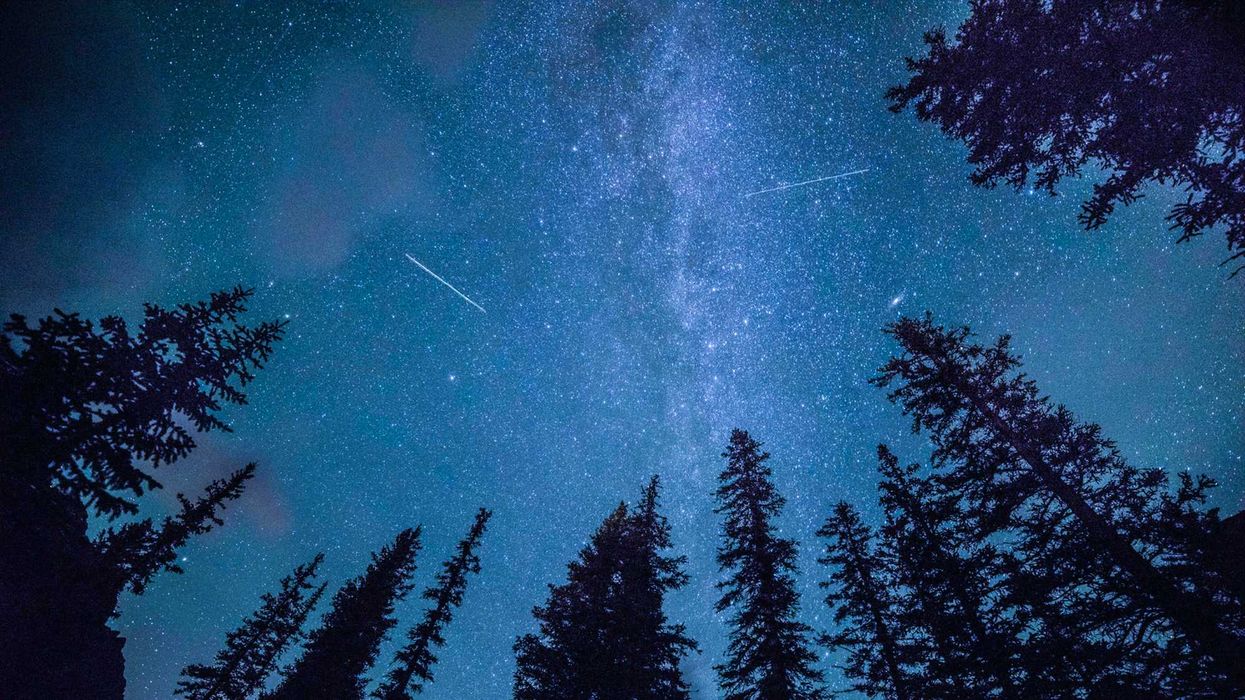
Meteor shower in Alberta.
The Geminid meteor shower is one of the best of the year, and it's peaking this weekend.
You could see "bright fireballs" in the night sky across Canada.
There are a few meteor showers that happen each year, like the Perseids, Quadrantids and Lyrids, but some are better than others.
The Geminids are considered "one of the most spectacular meteor showers of the year" because you could see up to 150 meteors an hour at the peak, according to Time and Date.
In 2025, the peak is at night on Saturday, December 13 and into the pre-dawn hours on Sunday, December 14.
This meteor shower is named after the constellation Gemini because the meteors seem to radiate from that constellation.
The Weather Network said that Geminid meteors are "a bit more leisurely" as they streak across the sky, which makes them easier to see.
Also, the Geminids can sometimes produce "bright fireballs" that typically look yellow and green.
The waning crescent moon won't appear in the sky until well after midnight during the peak, so you have lots of moonless hours to spot meteors.
Even when it rises, your view won't be blocked because the moon won't give off too much light, according to The Weather Network.
You can see the Geminids all over Canada, including in cities like Vancouver, Calgary and Toronto.
But you have a better chance at spotting more meteors in the night sky if you're away from bright city lights.
So, let's get into what you need to know if you're going to watch the Geminids this weekend.
You don't need any special equipment, like a telescope, to see a meteor shower.
It's recommended that you find a viewing spot away from the city lights so you can see even faint meteors.
Once at the location, give your eyes 15 to 20 minutes to get used to the dark.
Even though meteors seem to come from the radiant, these shooting stars can appear anywhere in the sky.
But finding the radiant point of the meteor shower can still help you see meteors if you don't want to shift your gaze back and forth across the night sky.
The higher the radiant is above the horizon, the more meteors you're likely to see, according to Time and Date.
For the Geminid meteor shower, the radiant is in the eastern sky on December 13 and then moves to the southern sky overnight into December 14.
Good luck!
This article's cover image was used for illustrative purposes only.