This meteor shower is lighting up Ontario's night sky with fireballs in April
Here's when to look for the Lyrid meteor shower!
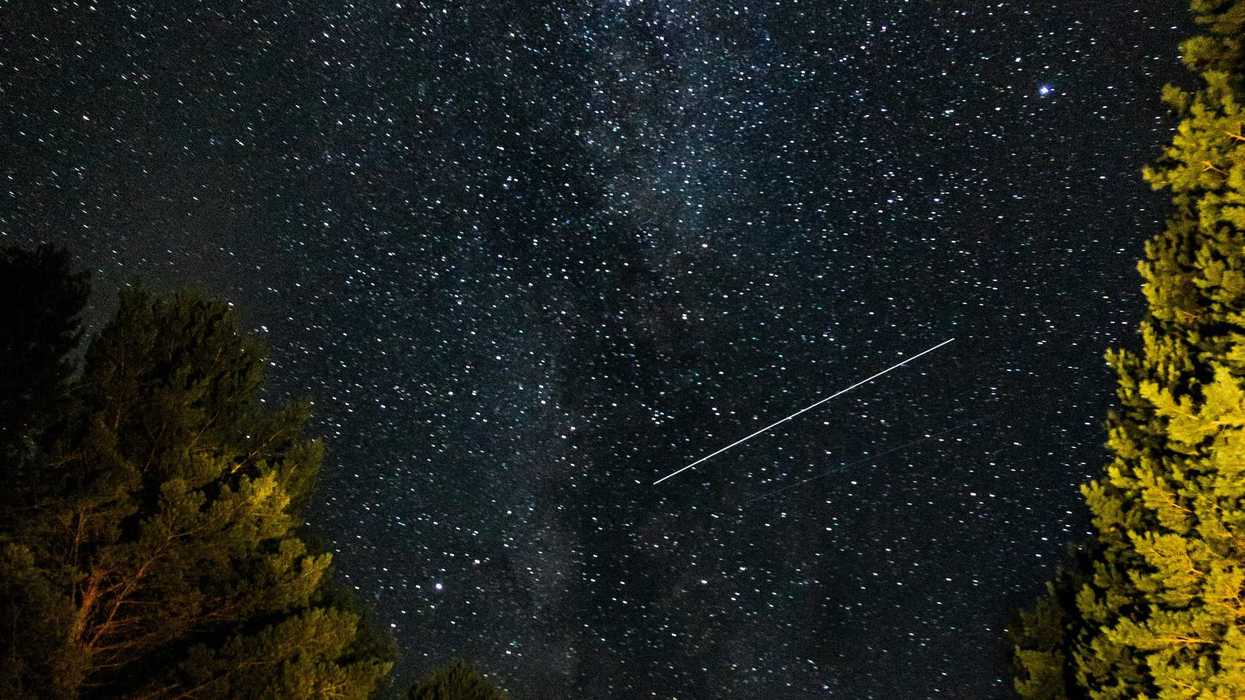
Meteor in the sky.
A meteor shower will light up the night sky in Ontario with shooting stars and fireballs this month!
You could see a lot of meteors during the peak, so here's what you need to know about the Lyrids.
The Lyrid meteor shower happens every year when Earth crosses a stream of debris in space from comet C/1861 G1 (Thatcher).
As the atmosphere takes in meteoroids from this comet's stream, it produces meteors in the night sky on Earth.
It's named the Lyrid meteor shower because meteors appear to originate from the constellation Lyra.
For the first few days, the Lyrids only produce a couple of meteors per hour and the occasional bright fireball. Then it intensifies leading up to the peak on the night of Wednesday, April 22 and into Thursday, April 23.
You can expect to see around 20 to 25 meters per hour during the peak. But there could be even more meteors than that and fireballs too!
After the peak, the number of meteors gradually declines until Earth exits Comet Thatcher's debris stream on April 30.
The peak of the Lyrids this year aligns with a waxing crescent moon that will rise in the sky after sunset and dip out of view just before 2 a.m. local time.
That means 2026 is a good year for this meteor shower because the moonlight won't be too bright.
If you want to see the Lyrids this year, the Canadian Space Agency has tips for viewing meteor showers.
You should find a place with dark skies away from city lights because even just a bit of light can make it difficult to see faint meteors. The chances of seeing shooting stars increase the further you get from city lights.
It's recommended that you have somewhere to sit or lie down because you'll be more comfortable and see more meteors from that vantage point.
Also, you should be patient since it might take a while to start seeing shooting stars, according to the Canadian Space Agency.
You don't need special equipment like a telescope to view a meteor shower.
This article's cover image was used for illustrative purposes only.