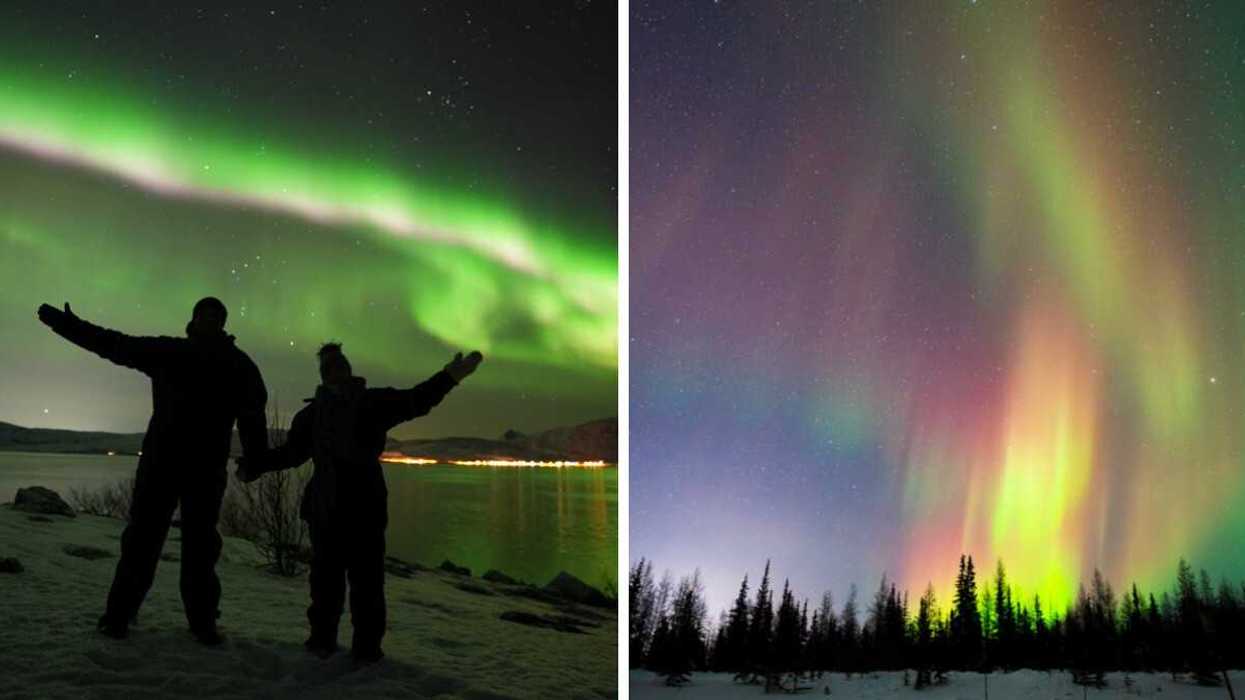
If seeing the northern lights in Canada has been on your bucket list for years, 2026 might be the year to finally make it happen. Not just because aurora viewing is magical — though it absolutely is — but because the conditions for seeing the northern lights are not expected to be this spectacular again for a decade.
For Canadians searching for the best places to see the northern lights, timing matters as much as location. And right now, both are aligning in ways that make the next few years particularly special for aurora tourism across Canada and beyond.
The reason comes down to the sun itself. According to NASA, solar activity operates on an 11-ish year cycle, shifting between quiet periods with minimal solar storms and peak years when the sun releases powerful bursts of energy into space. These eruptions send charged particles toward Earth, and when they collide with our atmosphere, they create the shimmering auroras that light up northern skies in waves of green, purple, and even red.
In October 2024, NASA and NOAA announced that the sun had entered its solar maximum period — the most active phase of Solar Cycle 25. This maximum phase was expected to continue through 2025 and into this year before solar activity begins its gradual decline. During this window, increased sunspot activity leads to more frequent solar flares and coronal mass ejections, creating optimal conditions for aurora displays.
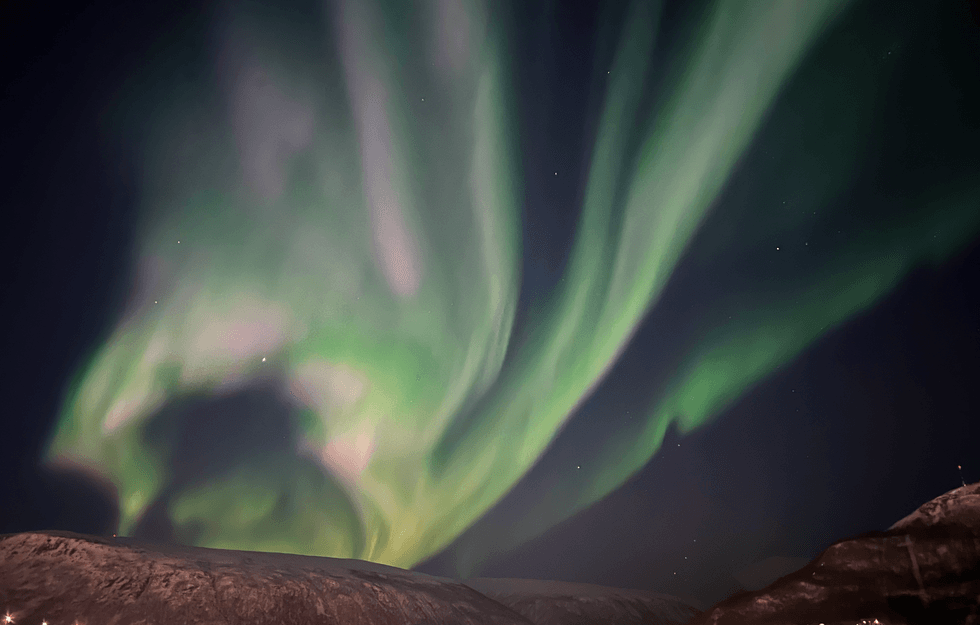 Visible northern lights, spotted in 2026 in Norway.Helena Hanson | Narcity
This is excellent news for aurora hunters who still have the lights on their must-see list, as the years during and immediately following solar maximum are often the most exciting for aurora viewing.
NASA notes that "scientists often see fairly significant storms during the declining phase of the solar cycle," meaning strong displays persist even as the sun moves past its peak.
In 2025, Pål Brekke, solar physicist at the Norwegian Space Agency, told Space.com that aurora chasers should expect exceptional conditions during the 2026-2027 season. "Peak auroral activity occurs a few years after solar maximum," he explained.
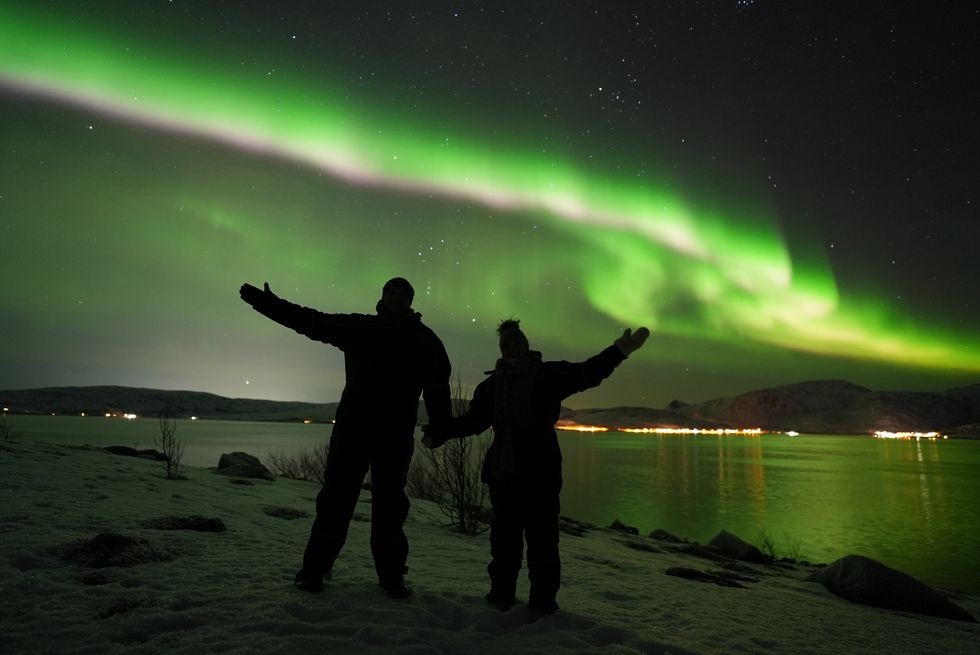 The northern lights, seen in 2026.Helena Hanson | Narcity
That puts this winter squarely in the sweet spot for northern lights travel — a year when solar conditions remain strong, vivid displays happen frequently, and the next comparable opportunity isn't expected until 2037.
For anyone who's been putting off an aurora hunting trip, the window is open. Here's where to see the northern lights in Canada — including some unexpected spots that might surprise you.
Seeing the northern lights in Canada
For Canadians, some of the world's best aurora viewing is right in our own backyard. The country's northern latitude, vast dark skies, and remote locations offer consistent displays without the need for international travel.
Perhaps unsurprisingly, one of the best places in Canada — if not the entire world — to see the northern lights is Yellowknife. The Northwest Territories capital experiences aurora activity up to 240 nights per year, and its location directly beneath the auroral oval means optimal viewing conditions. Add in the region's crystal-clear nights and ultra-low humidity, and it's as close to a guarantee as aurora viewing gets.
Yukon operates on a similar scale, with Whitehorse anchoring the territory's northern lights tourism. Vast wilderness, minimal light pollution, and high latitude create textbook conditions for viewing across the territory's expansive wilderness.
Both destinations offer infrastructure purpose-built for aurora tourism: expert guides, remote lodges, and local knowledge that can help visitors catch a show even when the weather doesn't cooperate perfectly.
Northern Manitoba sits in the sub-Arctic Circle along Hudson Bay, and it's home to Churchill — another of the top aurora viewing destinations on the planet. What sets Churchill apart is the ability to pair northern lights experiences with world-class wildlife viewing. Belugas, polar bears, and Arctic foxes all make appearances here, creating the kind of combination that's tough to find elsewhere.
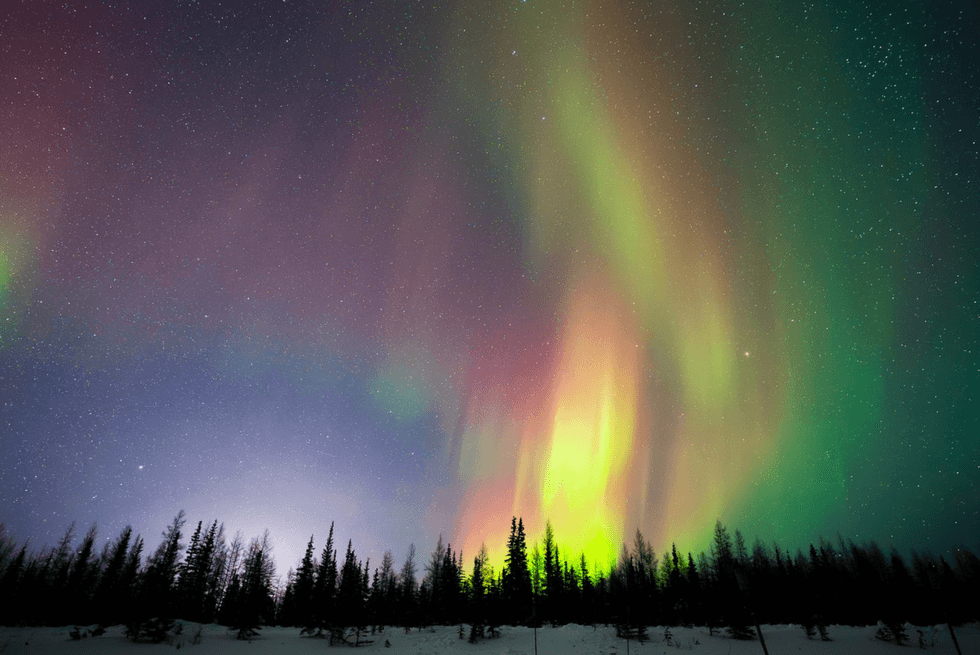 Churchill is one of the best places to view northern lights in Canada.Travel Manitoba
But you don't need to venture quite that far north for strong chances at seeing the lights.
Further south, Jasper National Park in Alberta has earned recognition from National Geographic as one of the best places to catch the northern lights year-round. The park is home to the world's second-largest dark sky preserve, and its location in the Rocky Mountains means you can watch auroras against one of the most dramatic backdrops imaginable.
Destination Canada notes that Ontario's Manitoulin Island and Pukaskwa National Park occasionally see displays on crisp, clear nights when conditions align. And in Newfoundland and Labrador, remote spots like the backcountry or Torngat Mountains National Park sometimes offer fleeting glimpses, particularly in the province's northern reaches.
These more southern sightings require luck, timing, and clear skies. Still, they prove that aurora viewing in Canada extends well beyond the Arctic Circle — you just need to know when and where to look.
Whether you head to the far north or try your luck closer to home, 2026 offers aurora conditions that won't return for more than a decade — and that's reason enough to finally book the trip!
This article's left-hand cover image was used for illustrative purposes only.