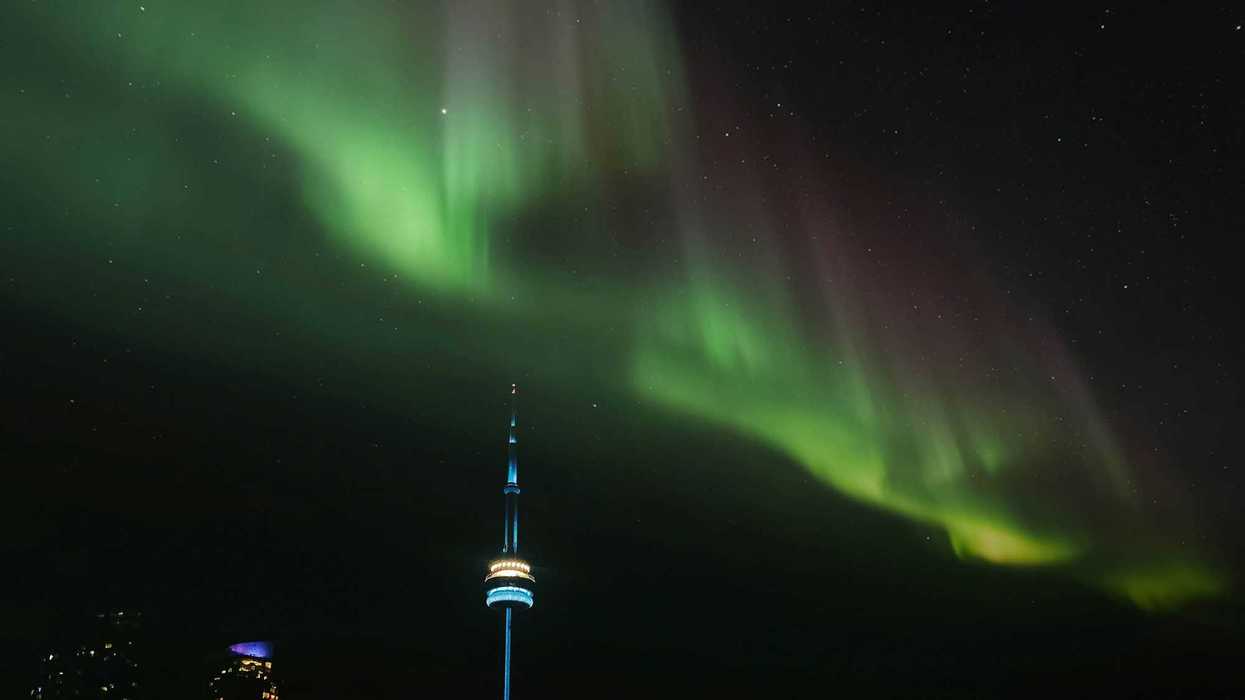
The northern lights are taking over the skies in places across Canada tonight.
That includes cities that don't usually see the aurora like Vancouver, Calgary, Toronto, Ottawa and Montreal.
NOAA's northern lights forecast called for "strong" geomagnetic storms on Thursday, June 4 and overnight into Friday, June 5.
The geomagnetic storm conditions are due to the arrival of several coronal mass ejections from the sun.
A "more intense" auroa is forecast in Whistler, Bella Coola, Kamloops, Kelowna, Whitehorse, Edmonton, Banff, Calgary, Lethbridge, Yellowknife, Saskatoon, Regina, Winnipeg, Kenora, Thunder Bay, Moosonee, Timmins, Saguenay, Labrador City, and surrounding areas.
The northern lights will be less intense in Vancouver, Victoria, Nanaimo, Sault Ste. Marie, Sudbury, Parry Sound, Huntsville, Ottawa, Cornwall, Montreal, Quebec City, Gaspe, Edmundston, Bathurst, and nearby places.
Toronto, the GTA and other parts of southern Ontario have low aurora visibility, but that doesn't mean there's no chance for you to see the northern lights.
The Weather Network said the best viewing will be in eastern parts of the country because clear overnight skies are forecast on Thursday into Friday.
Most of southern Ontario and southern Quebec will be clear, but increasing clouds are forecast overnight in northern Ontario.
It will be hit-or-miss northern lights viewing in the western parts of Canada as isolated storms and clouds move through the Prairies.
According to The Weather Network, skies will be mostly clear in northern Manitoba and central Saskatchewan. There will be periods of clear skies throughout the night in southern Alberta and increasing clouds overnight in B.C.
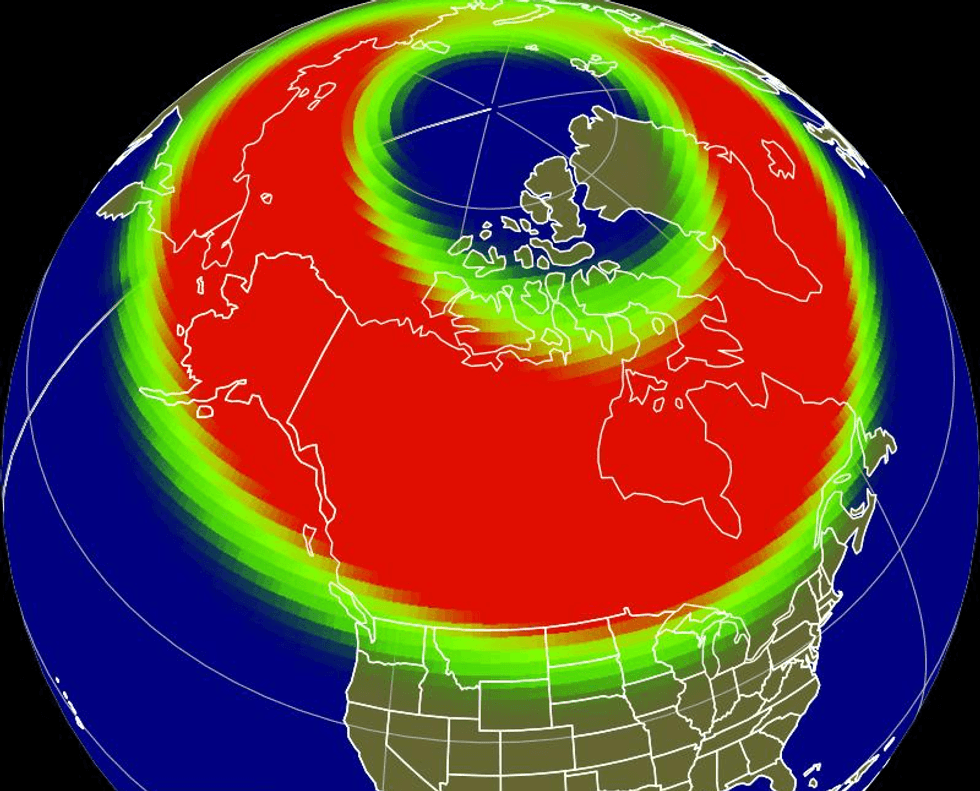 Northern lights forecast map of Canada for Thursday, June 4, 2026.NOAA
The Canadian Space Agency's aurora viewing tips can help you see the northern lights.
Usually, the northern lights appear a few hours after sunset and become more intense around midnight.
You should find a place with little or no light pollution because bright city lights can obstruct the view of less intense aurora.
Then, when you're in a dark location, you should look all around because the northern lights can appear anywhere in the sky, not just toward the north.
NOAA said that the aurora doesn't need to be directly overhead for you to see it.
The northern lights can be observed from as far as 1,000 kilometres away when the aurora is bright enough.
Also, no special stargazing equipment, like a telescope, is needed to see the northern lights.
This article's cover image was used for illustrative purposes only.