Quebec municipalities and environmentalists say province's water reserves are at risk
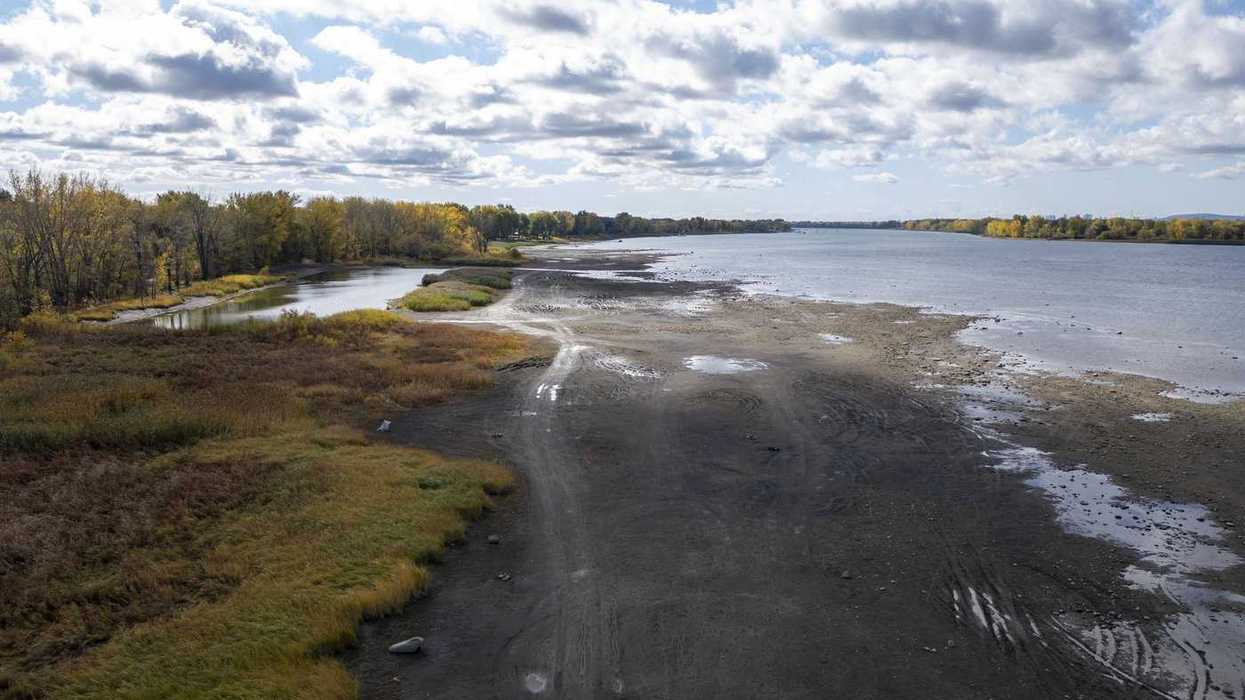
A group of environmental organizations and municipalities is worried that Quebec’s groundwater reserves are dwindling due to overconsumption and the effects of climate change.
In an open letter sent to the environment minister, the 12 municipalities and nine environmental organizations say the province is consuming more groundwater than is being replenished.
The municipalities, located along the Saint-Lawrence valley, say Quebec has taken its renewable freshwater for granted and are calling on the government to trigger a province-wide evaluation and increase regulation.
“In Quebec, we have long believed that water was an infinite resource. Gone are the days of rose-tinted glasses,” they wrote in the letter.
Quebec holds three per cent of the world’s renewable freshwater reserves, but water preservation groups like Eau Secours and Scabric say droughts and urban sprawl are putting pressure on the natural resource.
Aquifers – sediment saturated with freshwater – are connected to surface bodies of water, says Sabric president Daniel Pilon. While aquifers can store large amounts of water that supply human activity, depletion can cause rivers to dry up, he adds.
“In Quebec, there are lakes everywhere. We’re rich in water, that’s true. But now, we’re going through a period of drought, a time when people are overusing this resource,” Pilon said.
Scabric is a non-profit organization formed in 1993 and mandated to improve water and soil quality in the Châteauguay area’s drainage basins. Pilon says the organization started recording a strain on groundwater in 2015.
Though Pilon’s organization is limited in scope, he says other organizations monitoring drainage basins across Quebec reported similar findings.
However, he says it’s hard to know the extent of the issue and come up with solutions without a government-mandated study across the province handled by the Bureau d’audiences publiques sur l’environnement.
“We need to ask ourselves some questions because the situation is getting worse,” said Pilon.
He says that those in rural areas in the Montérégie region who depend on groundwater for daily consumption are having to dig their wells deeper each year. Some farmers struggle with irrigation, he adds.
Last year, the town of Sutton, Que. had crates of water shipped in because it feared a water shortage.
Pilon says increasingly hot summers and reduced rainfall are part of the problem. While some fluctuation is expected every year, the trend is worrying, he says.
According to the Canadian Climate Institute, climate change has made droughts more frequent and severe world-wide, making it harder to replenish natural water reserves.
Eau Secours president Rébecca Pétrin says there has also been a shift in how land is managed due to urban sprawl, which contributes to the problem. She says agricultural land has been drained and large areas have been made “waterproof,” meaning that rainwater is quickly channeled to a drainage system and into rivers.
“We’re draining our water away; we’re not retaining it. So, we’re seeing droughts occur much more quickly because the land hasn’t been able to absorb the water,” says Pétrin. “If we don’t retain the water, we don’t give it a chance to seep into the ground and eventually replenish the groundwater (that many people rely on).”
Pétrin and Pilon say that while there are some easy solutions – increasing sponge parks, marshes and retention basins, and banning lawn sprinklers – large-scale changes can only be implemented through government intervention.
Environment Minister Pascale Déry told journalists on Monday that a shortage of groundwater is “concerning,” but said there are measures in place to protect water already.
“Do we need to go further? Maybe, I think we need to have that discussion,” she said.
Déry said she would talk to her colleagues to see if the province-wide evaluation is the best tool before moving forward.
This report by The Canadian Press was first published June 8, 2026.
By Erika Morris | Copyright 2026, The Canadian Press. All rights reserved.