Response in helping victims of Lapu Lapu attack 'insufficient': Filipino BC
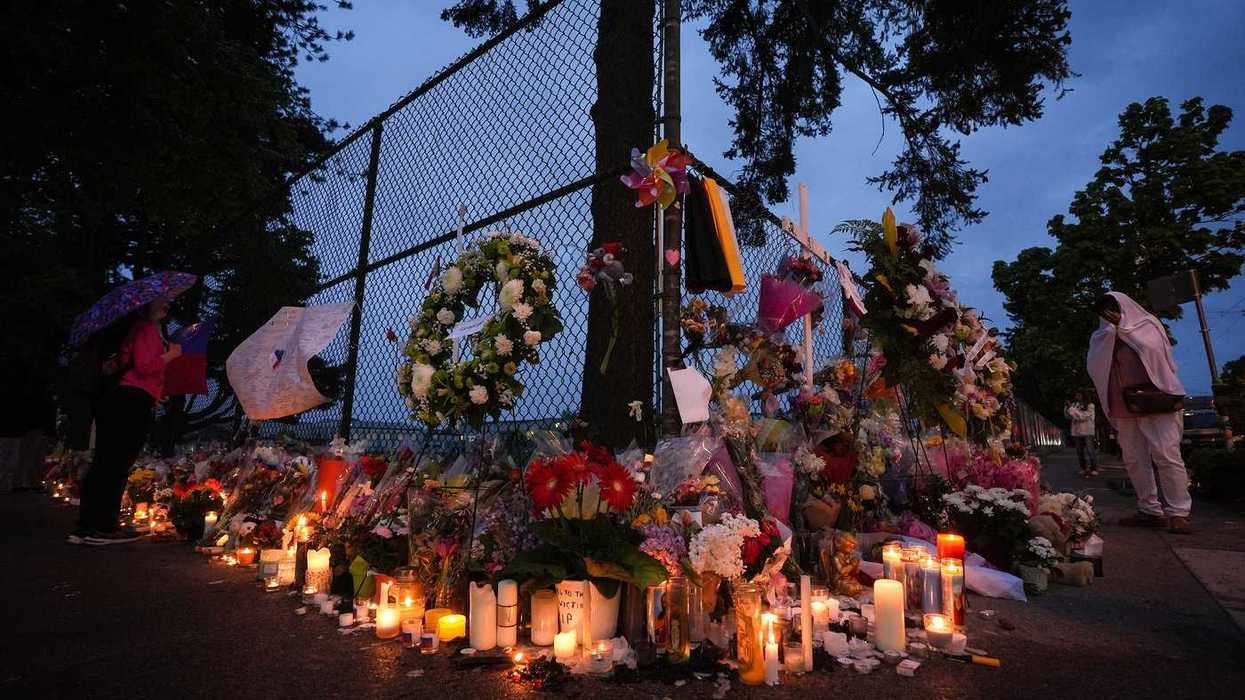
The group that organized the Lapu Lapu Day festival where 11 people were killed in a vehicle-ramming attack wants British Columbia's auditor general to investigate the province's response to the tragedy, saying it was "insufficient."
Kristina Corpin-Moser, executive director of Filipino BC, said the group was still providing benefits and counselling supports to survivors and she didn't know of any other community group that's been so heavily relied on to lead in such a crisis.
"Early action from a community organization does not mean the B.C. government could abandon its responsibility to manage and co-ordinate its own full-scale crisis response," she told a news conference on Tuesday.
Filipino BC has asked the auditor to look at which part of the government was responsible for reacting, and how the system failed 100 or so victims of the attack in getting counselling, medical and income assistance.
The purpose is to understand whether public systems worked as intended and what changes would fill gaps in future emergency response, Corpin-Moser said.
A statement from the auditor general's office said it had received the request from the group, but it doesn't comment on the details of potential or ongoing audits.
Adam Kai-Ji Low pleaded not guilty this month to 11 counts of second-degree murder and 31 counts of attempted murder for allegedly driving an SUV through a crowd at the event. His B.C. Supreme Court trial is expected to start next spring.
Corpin-Moser said there was a large difference between the tens of millions of dollars in funding that followed the Tumbler Ridge mass shooting, which left eight victims dead in the small community last February, and support supplied to the victims and the families of the Lapu Lapu Day attack in April 2025.
"I think now we've seen through the response in Tumbler Ridge, but also other mass casualty events that have occurred globally, that the response has been insufficient," she said of the vehicle-ramming attack.
"We also feel that there are just some questions around which ministries are responsible and if they've met their responsibilities to the public and to victims and survivors."
The group's early requests for help from the Canadian Red Cross were denied by the province, which claimed the attack didn't qualify for support because it was not a natural disaster, Corpin-Moser said.
She said there was a substantial difference in the response in Tumbler Ridge, including the deployment of the Red Cross and victim services, along with federal funding.
While the tragedies are distinct, Corpin-Moser said there are enough parallels to show the response to the Lapu Lapu attack wasn't good enough.
Filipino BC received about $550,000 from the province. Corpin-Moser said the money was used to support the group's staff, programs and the opening of its resilience centre, as well as direct payments to victims and survivors.
"I will say, though, that if community-based supports over five years is $40 million in the case of Tumbler Ridge, then $500,000 as a response seems wholly inadequate."
She said Filipino BC made more than a dozen requests for funding and wrote numerous proposals at the behest of various ministries and members of the legislature in an effort to secure greater support.
"We even asked the provincial government just to meet with victims and survivors to hear what their experiences (have been) as we're navigating these systems.
"And we rarely received a response," she said.
This report by The Canadian Press was first published Nov. 17, 2026.
Copyright 2026, The Canadian Press. All rights reserved.