Canada's Earliest Sunset Will Be At 3:17 PM When Daylight Saving Time Ends
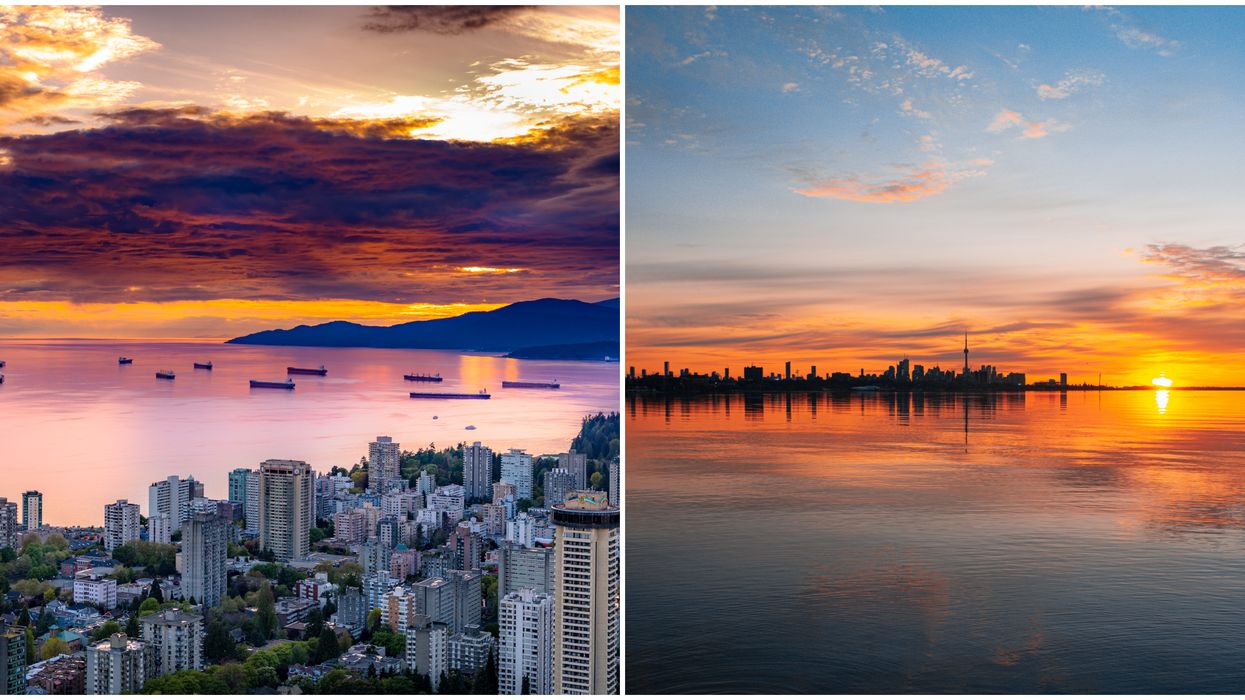
The clocks they are a-changin'! When daylight saving time in Canada ends, that means sunrises and sunsets will be so much earlier. The earliest sunset will actually be at 3:17 p.m. in one major city.
When daylight saving time ends at 2:00 a.m. on November 1, the clocks will go back by an entire hour in most parts of the country.
That means an extra hour of sleep!
For places that didn't scrap time changes like Saskatchewan and Yukon did, the return to standard time means different sunrise and sunset times.
Other provinces and territories are also trying to get rid of the twice-annual changes by staying on daylight saving time year-round but that could mean really late sunrises in the winter.
Here's when the sun will come up and go down in major cities across the country when we switch to standard time on November 1.
Editor's Choice: This Is When Each Region Of Canada Can Expect To See Their First Snowfall This Year
Vancouver
On November 1, the sun will rise up in the sky at 7:01 a.m. and then set at 4:49 p.m. in Vancouver for nine hours and 48 minutes of daytime.
After that, the sunrise will happen later and later while the sunset will happen earlier and earlier.
Edmonton
In Edmonton, the sunrise will happen at 7:34 a.m. and the sunset will happen at 4:59 p.m. That means the day will be nine hours and 25 minutes long.
Yellowknife
Yellowknife has one of the shortest daytimes when daylight saving time ends with just eight hours and 14 minutes. The sun will come up at 8:13 a.m. and go back down at 4:27 p.m.
Winnipeg
The sun will rise at 7:19 a.m. and set at 5:04 p.m. in Winnipeg for a day that's nine hours and 45 minutes long.
Iqaluit
Iqaluit has the shortest day and the earliest sunset of all the major cities on November 1.
The sunrise will happen at 7:16 a.m. and the sunset will happen at 3:17 p.m. for just eight hours of daylight.
Toronto
In Toronto, the sun will come up at 6:54 a.m. and then go back down at 5:07 p.m. which means the day will be 10 hours and 13 minutes long.
That's the longest daytime of any major city in Canada on November 1.
Montreal
Montreal will get 10 hours and six minutes of daytime when the sun rises at 6:34 a.m. and sets at 4:40 p.m.
Moncton
The sunrise will happen exactly at 7:00 a.m. in Moncton and the sunset will happen at 5:04 p.m. for 10 hours and three minutes of daytime.
Charlottetown
In Charlottetown, the sun rises at 6:54 a.m. and then sets again at 4:57 p.m. for the same daytime length as Moncton.
Halifax
The sun will rise at 6:52 a.m. and set at 5:02 p.m. in Halifax for a 10 hour and nine-minute long day.
St. John's
St. John's is the only major city in Atlantic Canada that has a day shorter than 10 hours on November 1.
The sun will come up at 6:45 a.m. and go back down at 4:42 p.m. for nine hours and 57 minutes of daylight.