First Nations chiefs call for inquiry into RCMP
First Nations leaders called on the RCMP to apologize and demanded a federal inquiry Thursday after CBC reported the police service spied on Indigenous political leaders in the 1960s and beyond.
CBC Indigenous uncovered some 6,000 pages of internal RCMP documents that indicate the RCMP was monitoring Indigenous political activity as early as 1968.
The CBC report said police targeted future national chiefs Noel Starblanket, David Ahenakew, Georges Erasmus and Phil Fontaine. CBC Indigenous reported that Ovide Mercredi, who also went on to serve as national chief, was mentioned in the files.
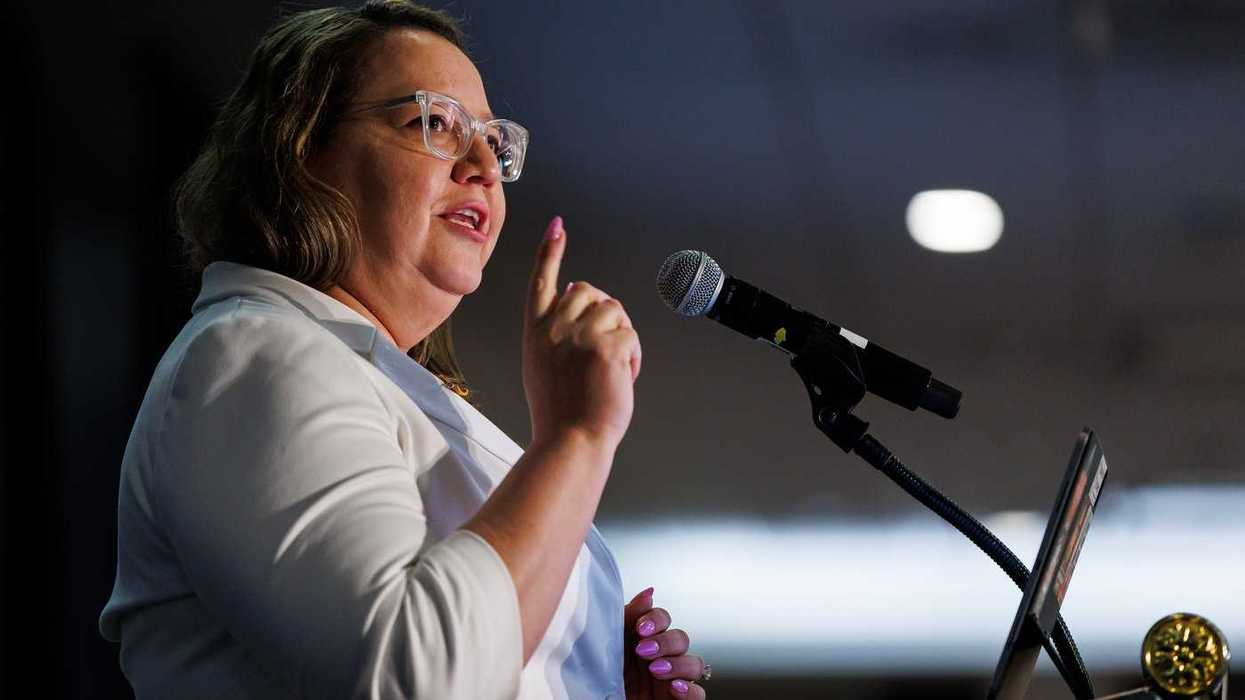
Assembly of Manitoba Chiefs Grand Chief Kyra Wilson said the RCMP should apologize directly to community members, on their own territories, by the end of the year for the "Native extremism" program.
"What we have learned through recent reporting confirms what our elders and our leaders and our nations have said for generations — that the RCMP have always monitored our First Nations leadership that engage in lawful advocacy. Our political movements were — and still are — labelled as extremism," she said at a news conference in Winnipeg on Thursday.
"If this government truly believes in transparency, if it truly believes in rebuilding trust, then this is the moment to prove it. That is why today we are calling for concrete action."
Wilson said she wants the RCMP to disclose all of its surveillance records on Indigenous peoples and leaders. She called on the federal government to launch an independent public inquiry and to offer assurances the surveillance program is not continuing under a different name.
"If you believe this was wrong, act on it. And to our people — we will not accept being monitored. We will not accept being labelled. We will always fight for a truth, for accountability and for the future of our nations," Wilson said.
A spokesperson for Public Safety Minister Gary Anandasangaree did not commit Thursday to launching an inquiry.
Simon Lafortune told The Canadian Press Anandasangaree met Thursday with Assembly of First Nations National Chief Cindy Woodhouse Nepinak and other First Nations representatives to discuss the CBC Indigenous reporting.
Lafortune said the RCMP will also meet with Indigenous leaders in the coming weeks to "address these serious revelations that have come to light, and to help chart a clear, collective course of action that ensures accountability and rebuilds trust."
"This work reflects a continued commitment to reconciliation — guided by openness, collaboration, and respect — and to building a stronger relationship between Indigenous communities, Canada and the RCMP," Lafortune wrote. "Our approach will reflect our shared responsibility to ensure public safety practices are fair, non-discriminatory, and rooted in respect for Indigenous rights."
RCMP Commissioner Mike Duheme expressed his "sincere regret" over the operations in a media statement last month, adding he understands the concerns the reporting raised for Indigenous communities across the country.
"The RCMP today is not the same organization it was decades ago, but I acknowledge that more must be done. We have reflected on those past actions and continue to learn from them," he wrote.
"Systemic racism has no place in the RCMP. Our values, oversight, training, and approaches to community engagement have evolved, guided by a commitment to respect, accountability, and service.
"Reconciliation requires confronting difficult truths and accepting our shared responsibility to move forward. The RCMP remains committed to this ongoing work, alongside Indigenous peoples, to help shape a stronger, more respectful future across Canada."
Nepinak said the reporting confirms what communities have suspected for decades, and called the RCMP's actions a violation of civil and political rights.
Mercredi, who is mentioned in the files, said he wants to know when they began surveilling him and called the operation an act of intimidation.
He said the leaders who were watched by the RCMP were only advocating for their peoples' rights and to improve the economic conditions of their communities.
"Our ancestors thought we could coexist with these people, (that) we can build a better society for all of us," he said.
"But our faith in coexistence was not shared by the country and my fear now is that history is repeating itself."
Mercredi pointed to legislation passed by the federal government last year that seeks to speed up federal approvals for major projects, including pipelines.
First Nations leaders threatened to launch widespread blockades if their rights are violated by that legislation, and several youth-led organizations are continuing to push back on it.
Mercredi said he worries that opposition will spur another state surveillance operation.
"That is the fear I have — that history repeats itself," he said.
"You can see how far the country is prepared to go to suppress our people … It's always been about exclusion. It's always been about Canada benefiting and Canada's people benefiting, but our people being targeted."
This report by The Canadian Press was first published April 16, 2026.
By Alessia Passafiume | Copyright 2026, The Canadian Press. All rights reserved.