Experts explain how Indigenous rights are a major hurdle for Alberta secession
Political scientists say Indigenous treaty rights represent a significant legal hurdle for separatists in Alberta, and have brought the debate on secession in Canada into unchartered territory.
"This is a new dynamic ... It's creating a lot of uncertainty," said Andrew McDougall, a lawyer and professor in the University of Toronto's political science department, in an interview Saturday.
"There needs to be consultation with Indigenous peoples, the extent to which is unclear," said Andre Lecours, a University of Ottawa professor.
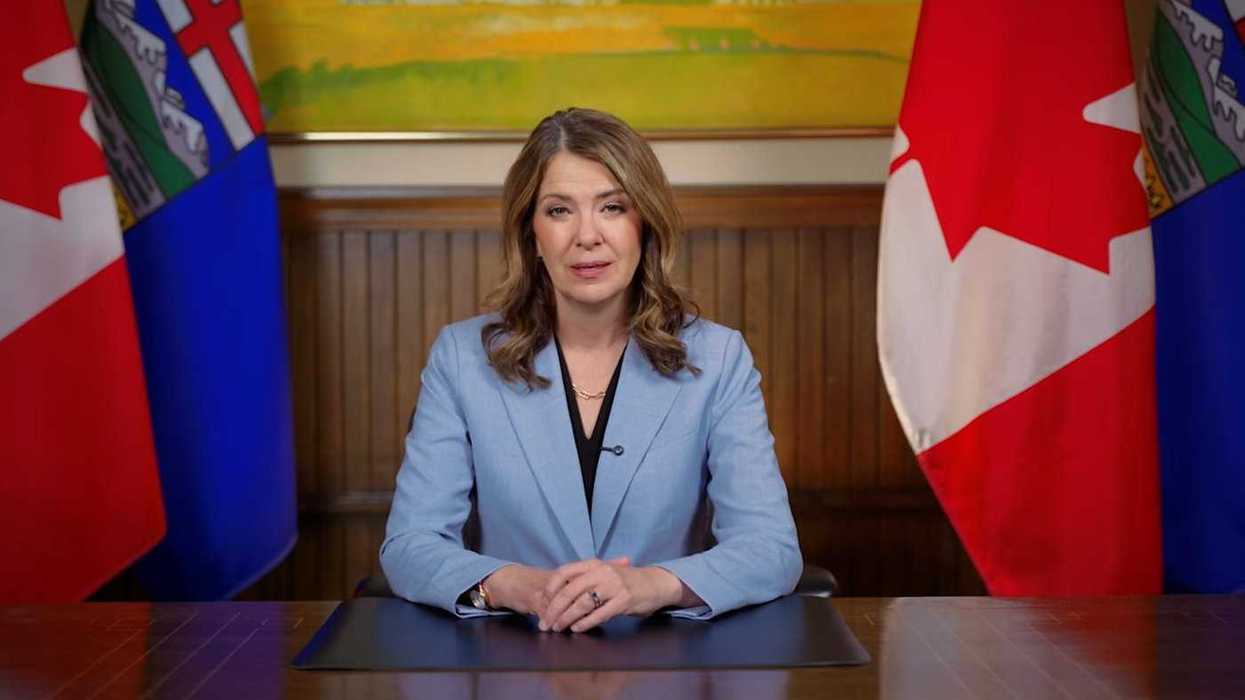
Premier Danielle Smith announced in a televised address on Thursday that an Oct. 19 referendum question will ask Albertans if they want to remain in Canada or start the process to hold a binding referendum on separation.
Smith said she couldn't directly put separation on the ballot because of a decision in early May by a judge to quash a separatist petition looking to force a vote on secession.
Justice Shaina Leonard said the petition shouldn't have been greenlighted because Smith's government neglected its constitutional duty to consult First Nations. She said Alberta’s secession from Canada would affect Treaties 7 and 8.
Smith said the obligation to consult is reserved for special projects like pipelines, and her government is prepared to appeal the decision all the way to the Supreme Court of Canada.
"In the meantime, under our legal system, this troubling court decision is binding law in Alberta until it is successfully appealed," she said in her address.
"This means that it is unlikely the courts will permit Elections Alberta to hold a binding provincial referendum on separation until this incorrect ruling is overturned or clarified."
McDougall said Indigenous rights and the duty to consult process have significantly evolved since the passing of the federal Clarity Act, which outlines the conditions for secession, after the 1995 Quebec separation vote failed by a slim margin.
McDougall said in the last 20 years, multiple litigations have passed through the courts that have led to judges halting or pausing government or industrial projects over the duty to consult. He added that the duty to consult, however, is not a veto.
He said Leonard's decision has brought the duty to consult into the context of secession.
"It is saying that clearly Indigenous interests are going to be impacted by separation so there is a process that the government has to undertake before they do this," McDougall said.
"It's a strong argument. Danielle Smith disagrees with that but we have to wait and see what the litigation is. We're all waiting. It's new. It's novel."
The Clarity Act states, among other things, that the federal government can begin negotiating the terms of separation if it decides voters were presented with a clear question on separation, and if referendum results reflect a clear majority want to quit Confederation.
McDougall said it also states Ottawa needs to consider diverse views, including ones of Indigenous people, before triggering the duty to negotiate with the seceding province.
But McDougall said the Clarity Act does not include an order for provinces interested in secession to consult First Nations first.
Lecours said consultations are a drawn out process.
"There's a lot right there," Lecours said.
"After we get some clarity on the Indigenous questions, there needs be consultation done, and then another referendum. I think you've got to give yourself maybe six months to a year to have a proper referendum."
If the federal government recognizes Alberta's independence, Canada would undergo massive constitutional reform.
"First of all, Canada would need to change its own constitution because it'd be nine provinces left, not 10," Lecours said.
"That would be a nerve-shattering moment in Canadian politics, for sure."
At the same time, Canada's duty to negotiate with Alberta will be triggered.
Negotiations could ask how much of Canadian debt would Alberta share or whether the countries would be trading partners, for example.
Alberta would also need to decide who's leading the country, establish its own military and its own legal system.
"Alberta is landlocked. It would need to decide if Albertans want to go from Saskatchewan to B.C. or vice versa, what happens," Lecours said.
"There would be a million different questions to tackle."
Grace Skogstad, a University of Toronto professor, said she's keen to see whether courts order Alberta to consult First Nations before seeking independence.
"The federal government assigned treaties before Alberta was created," she said in a Sunday interview.
She said treaties cover large portions of the province.
"They pertain to traditional rights such as hunting, fishing, that sort of thing. If Alberta becomes its own country, what happens to those rights?" she said.
"We've never got to a point where we have had to test this."
This report by The Canadian Press was first published May 24, 2026.
By Fakiha Baig | Copyright 2026, The Canadian Press. All rights reserved.