The simplest thing you can do to help prevent glaucoma, according to a Canadian optometrist
Glaucoma Awareness Week is a great time to get on top of it.
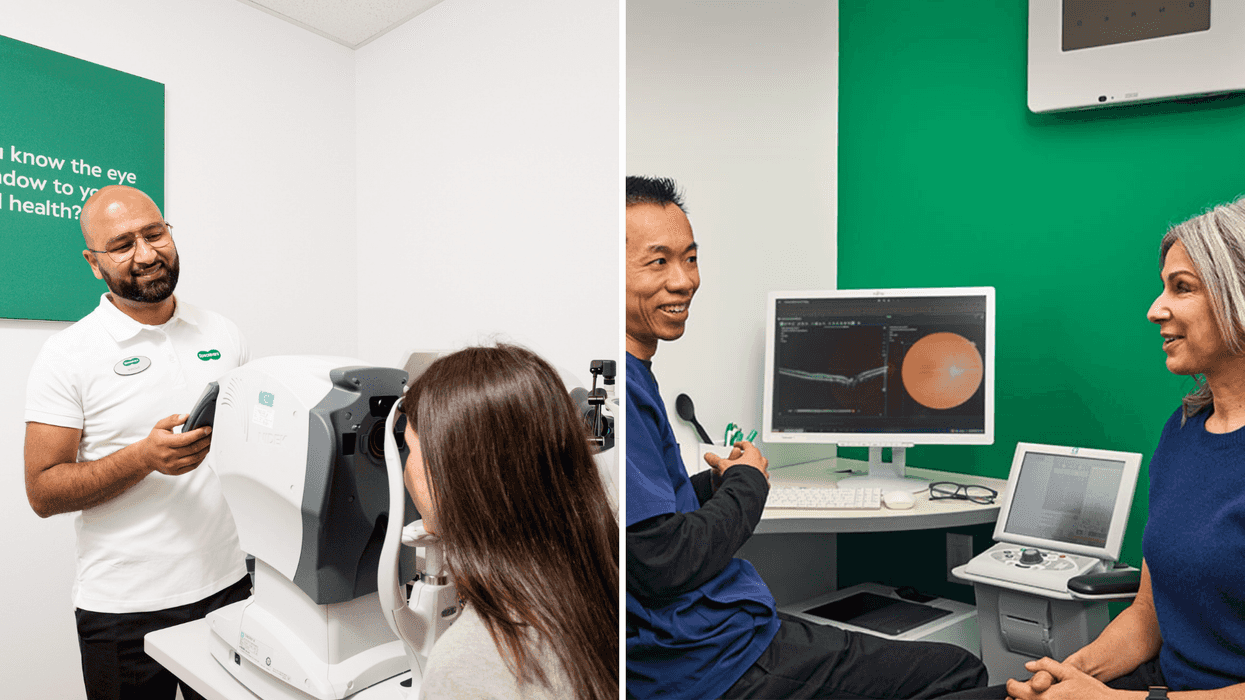
Eye clinic exam
"I don't need to see the optometrist, I can see fine!" you may say. But there are some very good reasons to get a regular eye exam — not least of which is to detect the early signs of glaucoma.
Glaucoma is an eye condition that damages the optic nerve and can lead to permanent vision loss. It can happen to anyone, and its slow progression has earned it the chilling nickname: "the silent thief of sight."
The vision loss caused by glaucoma typically affects your peripheral vision first and is often symptomless.
So, even if everything seems fine, booking an eye exam is a simple way to stay on top of your eye health.
This interview has been condensed and edited for clarity.
"Early detection is the most important factor in preventing irreversible vision loss caused by glaucoma," says Dr. Hiba Mannan, Independent Optometrist and Head of Professional Services at Specsavers Canada, adding that new technologies have helped optometrists to detect earlier changes in the condition.
"A comprehensive eye exam, especially one that includes an optical coherence tomography (OCT) scan, helps optometrists to see what's happening beneath the surface of your eye and can help catch problems before they may impact your daily life."
Specsavers equips locations with OCT technology so that it can be included as part of comprehensive eye exams.
"The good news, when caught early, glaucoma can be effectively managed," continued Dr. Mannan. "Most people with glaucoma don't experience symptoms, especially in the early stages."
March 8–12 is Glaucoma Awareness Week — a great reminder of how important regular eye exams are for maintaining your overall eye health. If it's been a while, this is a good time to book your routine eye exam.
The Canadian Association of Optometrists recommends adults get an eye exam every two years, with annual exams for children and seniors. If you have certain medical conditions or a family history of glaucoma, your optometrist may recommend more frequent exams.
"Eye exams are your first line of defence when it comes to glaucoma detection," says Dr. Mannan. "So it's a great idea to include vision care in your routine health checks."
Visit Specasvers.ca for more information on glaucoma or to book your next eye exam.
The information in this article is not intended and should not be construed as medical advice. Consult your health care provider before making any health care decisions or for guidance about a specific medical condition.