Lightning Killed A Soldier & Injured 9 In Georgia & It’s One Of The Deadliest States For Strikes
The National Weather Service calls lightning "Georgia's underrated killer."
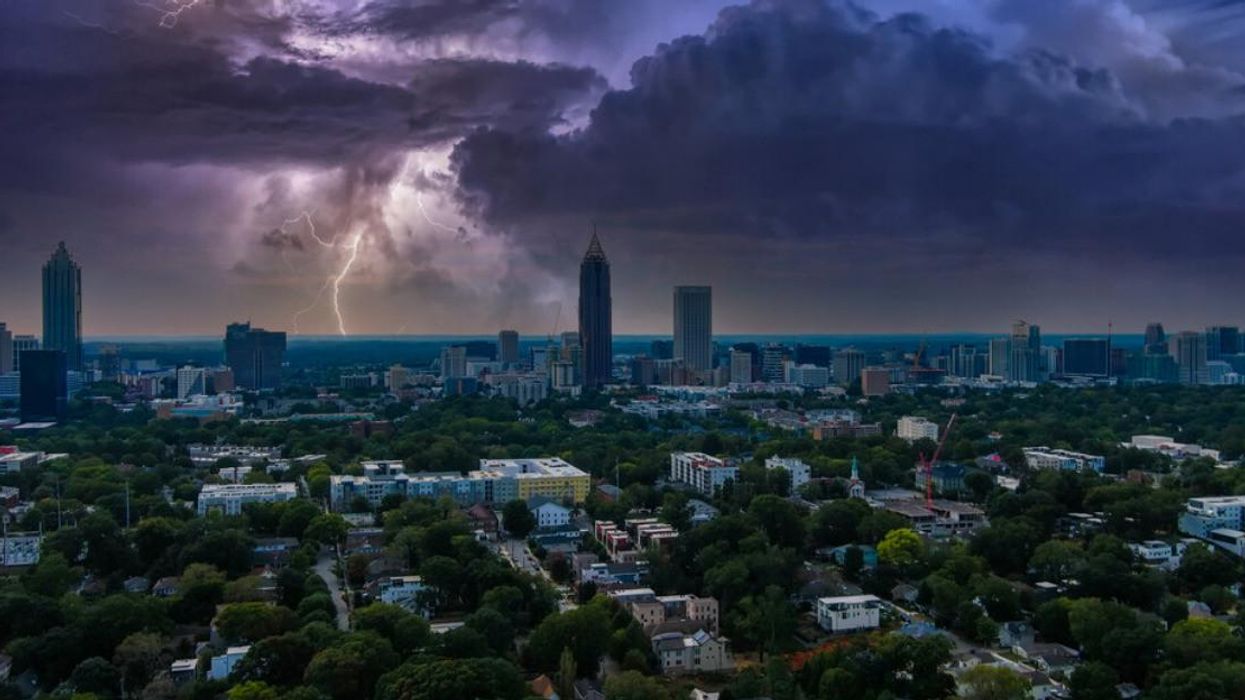
A storm looming over the city of Atlanta.
A fatal lightning strike killed one U.S. Army Reserve Soldier and injured nine others during field training at Fort Gordon in August, GA yesterday.
"It is with a heavy heart Fort Gordon confirms one of the soldiers injured in the lightning strike this afternoon succumbed to their injuries. No name will be released until the next of kin have been notified. We know there were injuries, but we don't know the extent of those injuries," Anne Bowman, a base spokesperson told ABC News.
The publication reported that the incident happened around 11:10 a.m. at Training Area 26 on Wednesday, July 20.
Weather data reflects that it was likely raining at the time of the strike.
The U.S. Army's Lightning Protection Safety Guide outlines the standard procedure for bad weather and states "In preparing personnel protection against lightning, planning is essential. Personnel must be aware of the hazards from step potential and flashover and must know what to do if an electrical storm threatens."
The guide also recommends performing a risk assessment, monitoring the activity, having shelter nearby, and prioritizing outdoor exposure to minimize risk.
The National Weather Service calls lightning "Georgia's underrated killer." As per their data, the Peach State is the "highest state interms of density of lightning strikesper square mile."
According to the CDC, Georgia is one of the deadliest states for lightning strikes, alongside Texas, Colorado, North Carolina, Alabama, Arizona, Missouri, New Jersey, Pennsylvania, and Florida, which is considered the "lightning capital" of the country.
Though the U.S. sees an average of 40 million lightning strikes each year, the odds of being struck are less than one in a million, and 90% of victims survive.
The report also states that "some factors that can put you at greater risk for being struck, such as participating in outdoor recreational activities or working outside. Regional and seasonal differences can also affect your risk of being struck by lightning."
Lightning-related deaths are most common during the summer months, particularly July.
This article's cover image was used for illustrative purposes only.