New US border rule requires Canadians to be photographed every time they enter… and exit
It includes children — and the photos are stored for life.
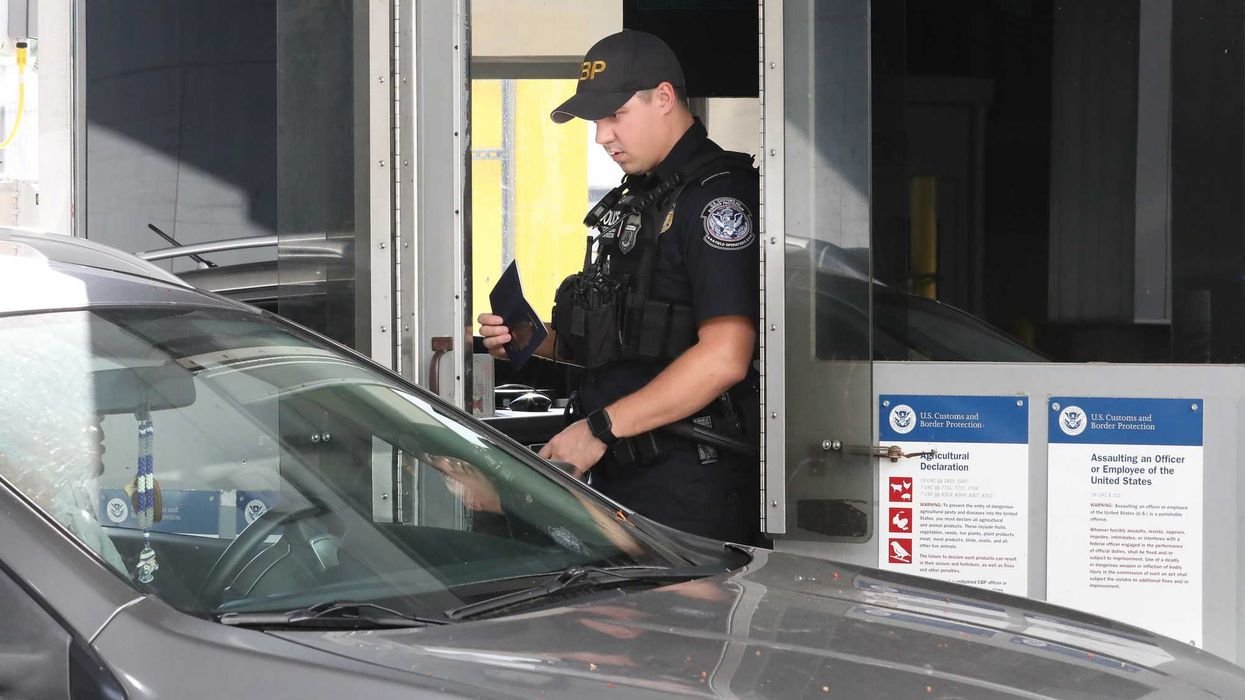
The U.S. just instated a new rule requiring all non-U.S. citizens — including Canadians — to be photographed every time they cross the border.
The United States has officially instated a sweeping new travel rule that requires all non-U.S. citizens — including Canadians — to be photographed each time they cross the border.
The change comes from a final regulation by the U.S. Department of Homeland Security (DHS) that expands the existing biometric tracking system, removing previous exemptions for certain travellers and applying across land, air and sea border crossings.
The new rule was published in the federal register in October and came into effect on Friday.
For Canadians planning U.S. travel — whether a quick border run, a road trip or a full-blown vacation — this shift marks a significant change in how border crossings could feel.
Here's everything you need to know about how the new U.S. border rule affects Canadian travellers.
What's changed
Under the new DHS rule, biometric photo collection is no longer limited by age, nationality or to those on their way into the U.S.
The measure gives U.S. Customs and Border Protection (CBP) the authority to collect facial photographs of all non‑U.S. citizens — including Canadians — both when entering and leaving the United States, at airports, land crossings, seaports or any other "authorized point of departure."
It also scraps previous age‑based exemptions. Children under 14 and adults over 79 — groups that were once often exempt — could now be subject to the requirement.
CBP says the expansion is meant to complete a long-delayed goal to create a nationwide biometric entry-exit system that ensures foreign travellers are accounted for when they enter and when they leave the country.
The agency says facial recognition technology helps cut down on identity fraud, visa overstays and the misuse of travel documents.
No more exceptions for kids
In perhaps the biggest shift from previous rules, effective today, kids under 14 are no longer exempt from biometric screening at the U.S. border. That means Canadian children and even babies crossing into or out of the United States could have their photo taken and stored in the federal database as part of CBP's identity verification process.
The U.S. government claims the change is meant to fight identity fraud and child trafficking. In some cases, that could mean verifying whether a child being brought across the border matches their travel documents — something that can help uncover situations where unrelated adults pose as parents.
But the rule also reveals a broader purpose: collecting photos of kids now "enables DHS to associate the immigration records created for children to their adult records later," which could assist in identifying "associations with terrorist or other organizations" later in life, it says.
Before now, the exemption was based on older fingerprint technology and law enforcement practices that didn't typically include young kids. But because facial recognition doesn't require physical contact and is already used in other travel settings, DHS now considers it suitable for all ages — and effective starting today.
Your data is stored for life
Under existing regulations, the U.S. government stores all photos and other biometric records collected from non‑U.S. citizens in their database for 75 years.
DHS says this long retention period is necessary to support immigration enforcement, identity management and national security screening throughout a person's lifetime.
To speed up identity checks, CBP builds custom photo collections called "galleries" using images from its existing database. These galleries are built using photos the U.S. government already has on file — including past border crossings, visa applications, passport photos and other official encounters.
Border officials then use facial recognition technology to match live photos with images from relevant galleries automatically. These galleries can be tailored to different travel patterns, meaning if you're a frequent traveller or booked on a flight, your photo might be pre-loaded into a set of images used to identify people as they arrive.
Some commenters raised concerns about how long this data would be kept, along with the risks of breaches and misuse. The official response to these concerns was that "numerous federal statutes require DHS to create an integrated, automated biometric entry and exit system that records the arrival and departure of aliens," and therefore it "cannot delete personally identifiable data and only retain a record of entry-exit."
DHS says it uses encryption and other controls to limit who can view the data, although other U.S. federal agencies can access it.
What the process might look like
If you're a Canadian crossing the border by car, plane or boat, you could be asked to pose for a headshot photo.
CBP's facial recognition technology will compare your image to their database, which includes passport and visa photos, images from your previous border crossings and other records already on file.
The rule also gives CBP the authority to collect other biometrics — such as fingerprints, iris scans, voice prints and even DNA — although most Canadian citizens are still exempt from this requirement.
However, permanent residents and other non-citizen travellers from Canada should be prepared for the possibility of being asked to provide these additional biometrics, especially in cases where identity verification cannot be completed through facial recognition alone.
Refusing to comply could lead to serious consequences. For non-U.S. citizens, including Canadians, CBP could deny entry or boarding or treat the refusal as a violation of immigration rules.
What this means for Canadian travellers
If you're heading to the U.S. this winter — or are already there and planning to return home soon — be prepared for the possibility of that extra step. You may have your photo taken at the border, and any kids travelling with you could be required to have theirs taken as well.
That said, CBP says it could take three to five years to fully implement biometric systems at all commercial airports and seaports, and land border rollout could be an even bigger challenge.
Still, if you cross the border often or plan to travel soon, be prepared to be photographed — and don't bother trying to refuse. Even if you're not affected right away, it's wise to assume the process is coming soon.
There's no opt-out option for Canadians, and declining to comply could result in being turned away, delayed or worse.
Would you be okay with U.S. border agents taking (and storing) your photo every time you cross?
READ NEXT: Some Canadians travelling to the US now have to pay a new $350 'integrity fee'
- Canada-US travel advice keeps changing — Here are all the latest rules & ominous warnings ›
- Canada has some surprisingly intense warnings for American travellers over the holidays ›
- Some Canadians travelling to the US now have to pay a new $350 'integrity fee' ›
- Here are all of Canada's federal & stat holidays for 2026 if you already need a day off - Narcity ›
- Canada just approved US-made jets under threat of massive new tariffs from Trump - Narcity ›
- Canadian father detained by ICE for months says he got 1 frozen waffle in 24 hours - Narcity ›