There's an E. coli outbreak in Canada related to Pizza Pops and people have been hospitalized
You might have recalled products in your freezer.
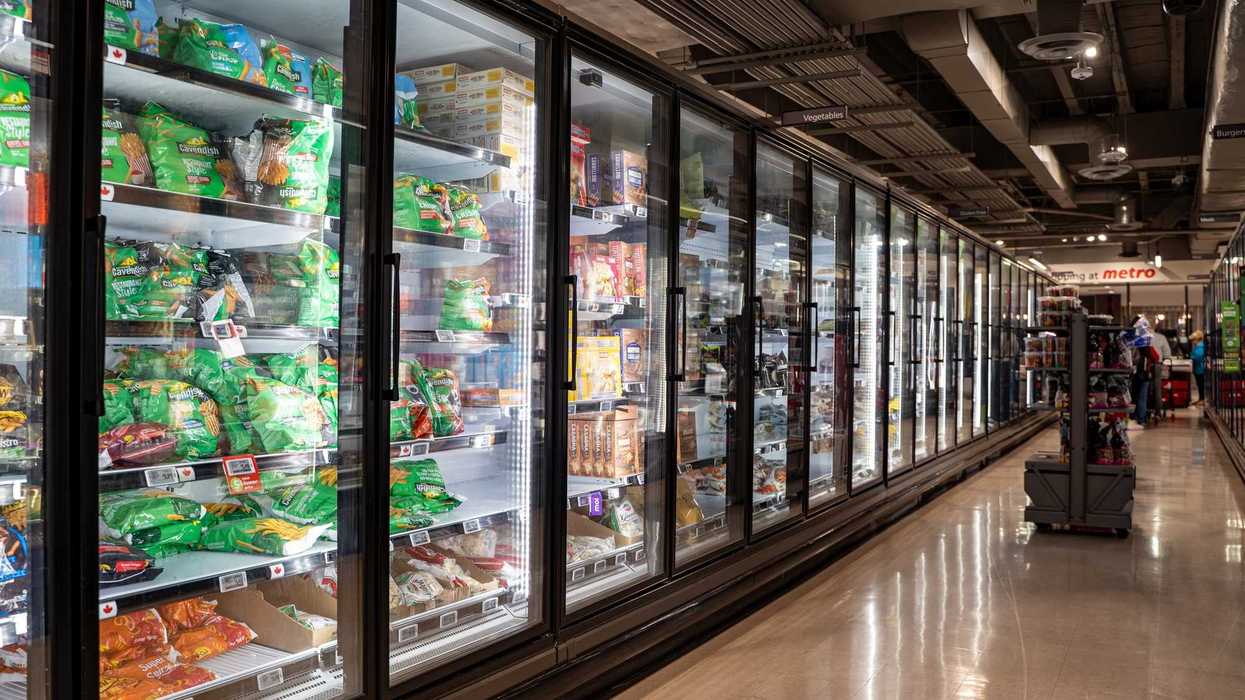
Frozen food aisle at a grocery store in Canada.
There is an E. coli outbreak in Canada that's related to Pizza Pops.
Here's what you need to know about the outbreak, product recalls, symptoms of infection, and more.
Recently, the Public Health Agency of Canada updated a public health notice for the outbreak of E. coli infections linked to Pillsbury brand Pizza Pops.
There are 29 laboratory-confirmed cases of E. coli O26:H11 illnesses associated with this outbreak in B.C. (four), Alberta (12), Saskatchewan (six), Manitoba (two), Ontario (two), New Brunswick (two) and Newfoundland & Labrador (one) as of January 26, 2026.
Of those cases, seven people have been hospitalized, and there have been no deaths.
This notice only includes laboratory-confirmed cases, so the actual number of sick people is "likely much higher," according to the Public Health Agency of Canada.
Food recall warnings were issued in December and January for certain Pillsbury Pizza Pops.
Here are the flavours, sizes, codes and best before dates of the recalled products:
- Pepperoni + Bacon, 30 pizza snacks (2.85 kilograms)
- UPC 0 69052 12961 9; better if used by 09JN2026WN, 10JN2026WN, 18JN2026WN and 19JN2026WN
- Supremo Extreme Pepperoni + Bacon, 30 pizza snacks (3 kilograms)
- UPC 0 69052 46901 2; better if used by 10JN2026WN, 11JN2026WN, 12JN2026WN, 17JN2026WN and 18JN2026WN
- Pepperoni + Bacon, eight pizza snacks (760 grams)
- UPC 0 69052 12967 1; better if used by 09JN2026WN and 10JN2026WN
- FRANK's RedHot Pepperoni + Bacon, four pizza snacks (380 grams)
- UPC 0 69052 12947 3; better if used by 14JN2026WN
- 3 Cheese, four pizza snacks (380 grams)
- UPC 0 69052 12952 7; better if used by 15JN2026WN and 16JN2026WN
- 3 Cheese, 30 pizza snacks (2.85 kilograms)
- UPC 0 69052 12958 9; better if used by 15JN2026WN and 16JN2026WN
- Pepperoni, four pizza snacks (380 grams)
- UPC 0 69052 12953 4; better if used by 16JN2026WN and 17JN2026WN
- Pepperoni, 30 pizza snacks (2.85 kilograms)
- UPC 0 69052 12962 6; better if used by 17JN2026WN
- Pepperoni + Bacon, four pizza snacks (380 grams)
- UPC 0 69052 12948 0; better if used by 18JN2026WN and 19JN2026WN
- 3 Meat, four pizza snacks (380 grams)
- UPC 0 69052 12955 8; better if used by 19JN2026WN, 20JN2026WN and 21JN2026WN
- Deluxe, eight pizza snacks (760 grams)
- UPC 0 69052 12966 4; better if used by 08JN2026WN and 09JN2026WN
- Deluxe, four pizza snacks (380 grams)
- UPC 0 69052 12949 7; better if used by 14JN2026WN and 15JN2026WN
- Deluxe, 30 pizza snacks (2.85 kilograms)
- UPC 0 69052 13288 6; better if used by 14JN2026WN and 15JN2026WN
These products should not be consumed, used, sold, served or distributed.
You're being told to check if you have the recalled products in your home by looking for the specific product name and size, UPC and best before dates in the recall alerts.
If you have the affected products, you can throw them out or return them where you purchased them.
Also, you should clean and sanitize all surfaces and areas that the recalled products may have come in contact with, including countertops, containers, utensils, freezers, and refrigerators.
You're being told not to cook food for people if you've been diagnosed with an E. coli infection or have symptoms of an infection.
E. coli infections are bacterial illnesses that can affect anyone exposed to a contaminated food product.
"People who are infected with E. coli bacteria can spread the bacteria to other people several days to several weeks after they have become infected, even if they don't have symptoms," the Public Health Agency of Canada said.
E. coli infections have many symptoms that typically start within one to 10 days after exposure to the bacteria.
Symptoms include nausea, vomiting, headache, mild fever, severe stomach cramps, and watery or bloody diarrhea.
Most symptoms end within five to 10 days, and most people recover on their own. Some people may have a more serious illness that requires hospitalization and may lead to long-lasting health effects or even death.
If you think you're experiencing symptoms of E. coli, the Public Health Agency of Canada said to contact a healthcare provider.
This article's cover image was used for illustrative purposes only.