Fuel tax pause offers bigger break to higher-income families: budget watchdog
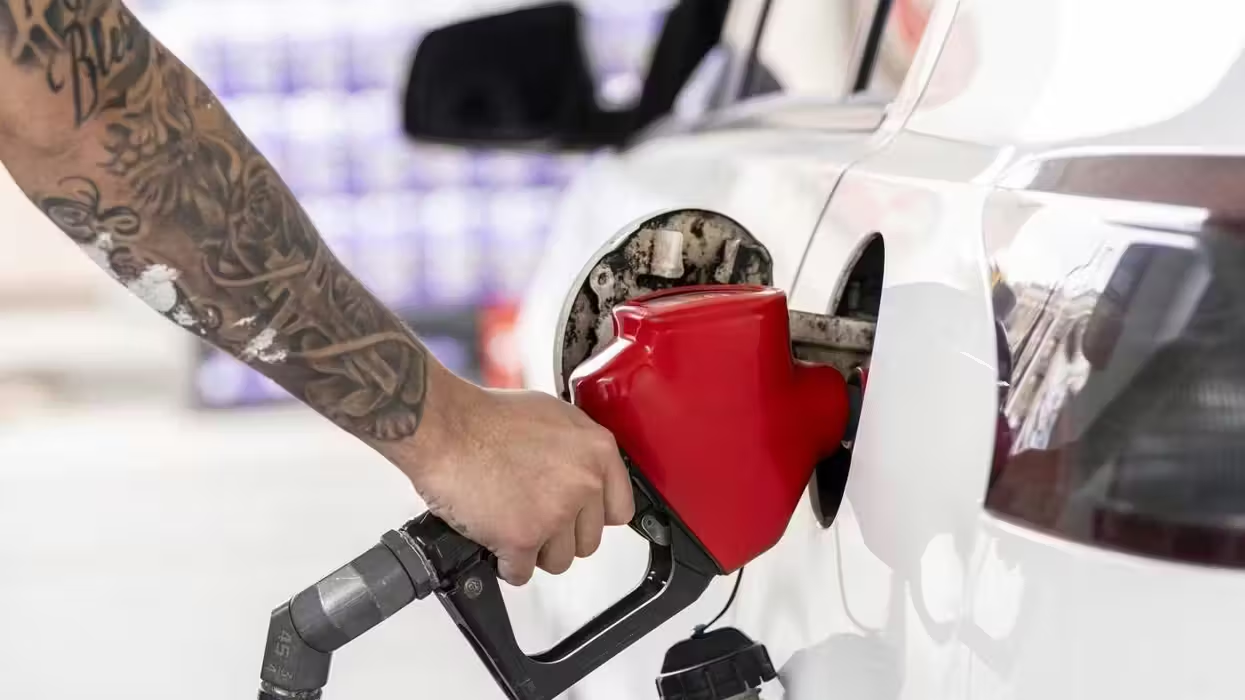
Ottawa's gas tax pause is offering a bigger break at the pumps to the households that earn the most largely because they buy more fuel, the parliamentary budget officer says in a new report.
The federal government temporarily suspended the federal excise tax on gasoline, diesel and jet fuel in April. The pause was supposed to end on Sept. 7 but the government announced last month it would extend that pause into 2027.
Half the tax rate will be reapplied starting Feb. 1 and the tax will be restored to the full rate on April 1.
Parliamentary Budget Officer Annette Ryan said in a new report Thursday that the total tax pause will save the average family $276 over the course of the roughly one year it's in place.
But those savings increase for families in higher tax brackets. The PBO estimates that families in the highest income quintile can expect to save an average of $468, while those in the lowest quintile would see just $132 in relief.
Fuel costs often make up a bigger share of lower-income families' total budgets but households that earn more also typically spend more at the pumps.
The Liberals paused the fuel excise tax to offer Canadians relief from a global energy shock driven by the war in Iran.
The government has not provided a per-family estimate of tax savings from the program. Ottawa says the suspension removes roughly 10 cents from a litre of gasoline and four cents from a litre of diesel.
John Fragos, spokesperson for Finance Minister François-Philippe Champagne, said the fuel tax pause is a blanket measure that applies evenly to all Canadians based on how much they're driving.
The Liberals' other major affordability program, the Canada Groceries and Essentials Benefit, is income-tested and proportionally benefits lower-income households with direct payments, he noted.
Fragos also said that the relief on diesel costs can also pass through Canadian supply chains. Those savings per fuel litre can cut costs for businesses and bring down final prices for consumers on store shelves, he argued.
The PBO noted its estimates assume total savings from the tax break are passed on by producers, but those projections could be affected if corporations retain those savings.
The budget office expects the total cost of the fuel tax pause will be $4.9 billion, just under the federal government's estimate of $5.3 billion.
The federal Conservatives attempted to pass a motion this week to extend the tax break and cut other fees associated with diesel production, but the proposal was voted down by other parties in the House of Commons on Wednesday.
This report by The Canadian Press was first published Oct. 8, 2026.
By Craig Lord | Copyright 2026, The Canadian Press. All rights reserved.