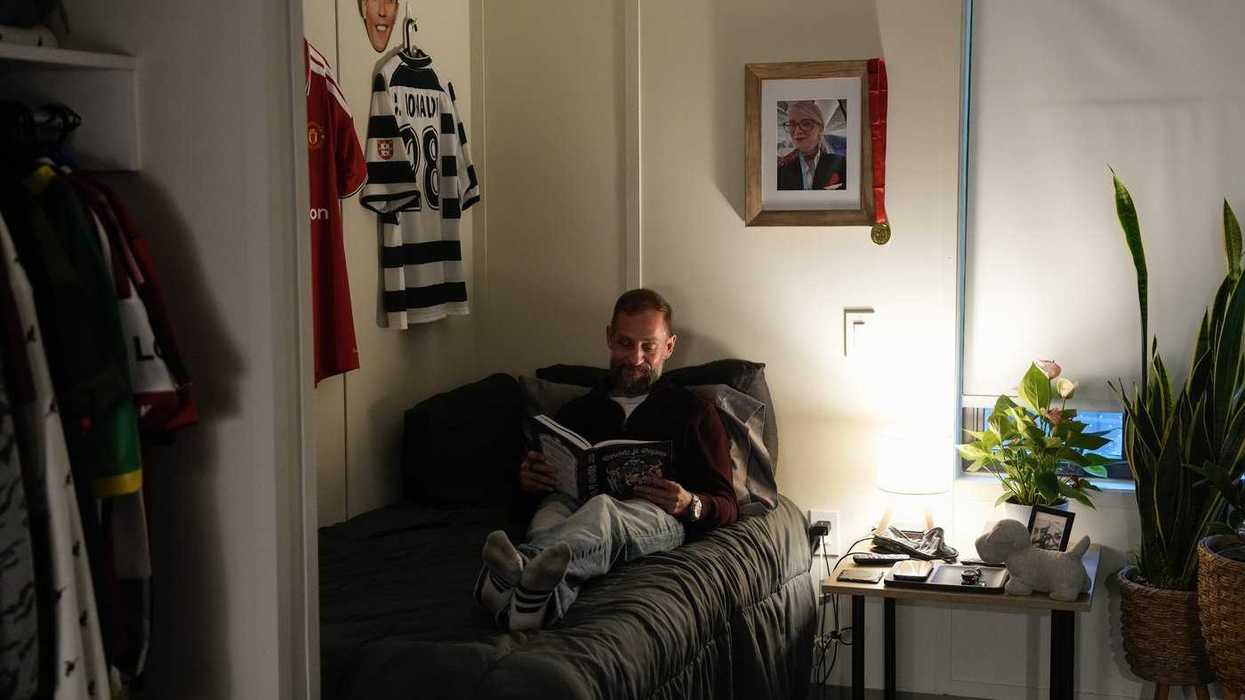
A Toronto hospital network is set to greatly expand its unique permanent housing program that largely serves homeless people who visit hospital emergency departments an inordinate amount of time.
The University Health Network's Dunn House has seen great success in the early days for its 51 residents, a model that will expand to help 300 people.
The modular build opened in Toronto's west end in 2024. Federal and provincial governments, along with the city, announced earlier this year they would help build a similar 54-unit building, dubbed Spring House, which is geared to seniors who are struggling with homelessness.
Now, the plan is for three more buildings in Toronto.
"It gives me a lot of hope that we can rally behind a solution that is more humane and cost-effective," Dr. Andrew Boozary, the executive director of the Gattuso Centre for Social Medicine at UHN, said in an interview.
Preliminary data has shown that 48 residents of Dunn House visited emergency rooms 52 per cent fewer times a year after they moved in, along with a 79 per cent drop in the length of their hospital stays when they were admitted.
The 48 patients racked up $2.1 million in hospital costs over 12 months before moving into Dunn House, and in the year after the hospital saved $1.66 million.
The project will again be a partnership between the federal and provincial governments, along with the city and the hospital.
The federal government will invest more than $25 million to get the third building up and running, with units for about 80 people. The City of Toronto will contribute $19 million while UHN Foundation will pony up $20 million for the broader build.
The province is set to provide support for health services and health-care workers.
The housing project features direct access to doctors, nurses and a host of other health professionals with the goal of improving their health and alleviating pressure on the hospital.
"Investing in the Dunn House model is critical to solving the housing crisis across the continuum," federal Housing and Infrastructure Minister Gregor Robertson said in a statement.
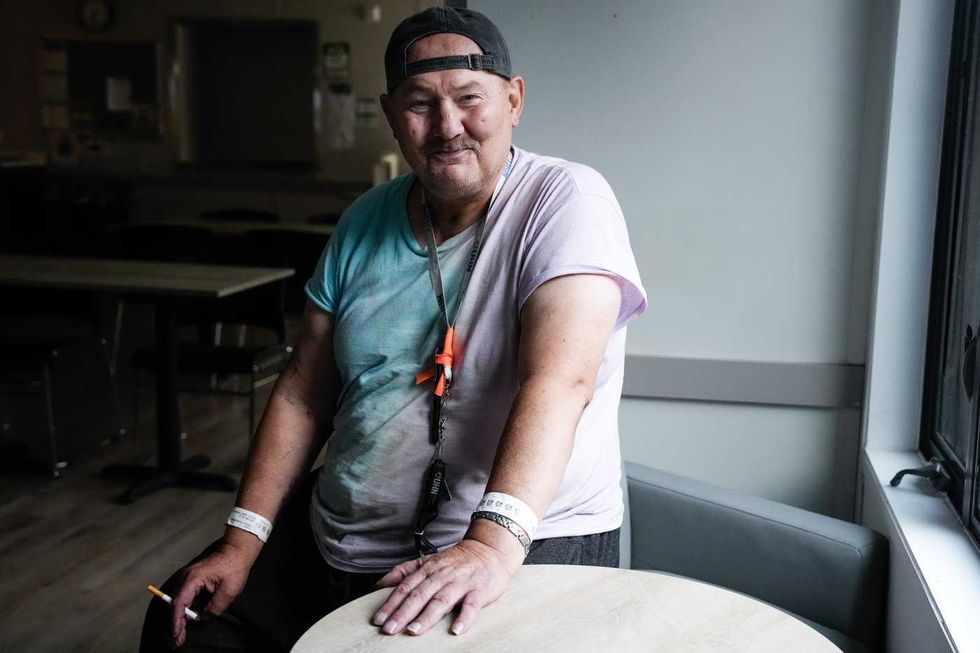 Thomas Limshalm, a resident at Toronto's Dunn House, is photographed in a common area at the medical housing initiative on Wednesday, Sept. 30, 2026.THE CANADIAN PRESS/Chris Young
The Canadian Press has previously spoken to more than a dozen residents, all of whom loved their new homes. Many said they have since turned their lives around, some have weaned themselves off drugs and got jobs while others have returned to school.
The homes are permanent so residents do not have to leave when their health improves.
It's a win for the city, said Toronto Mayor Olivia Chow.
"The Dunn House model is working. It’s helping people build stable lives, access vital resources, and stay off the street and out of the emergency room," she said in a statement.
The city is looking to invest a further $27 million in the project, which will be subject to council approval.
"It's not sensationalist to say that this is going to be matters of life and death," Boozary said.
"When you look at the data in the country that people who are chronically unhoused live half as long as the general public, that they're losing 20 to 30 life years, that a chronically unhoused woman in Toronto's average life expectancy is 42, it's a moral failure and it's damning."
This report by The Canadian Press was first published Oct. 1, 2026.
By Liam Casey | Copyright 2026, The Canadian Press. All rights reserved.