8 government benefit payments you can get from the CRA & Service Canada in January 2026
Some are increasing this month too! 💰
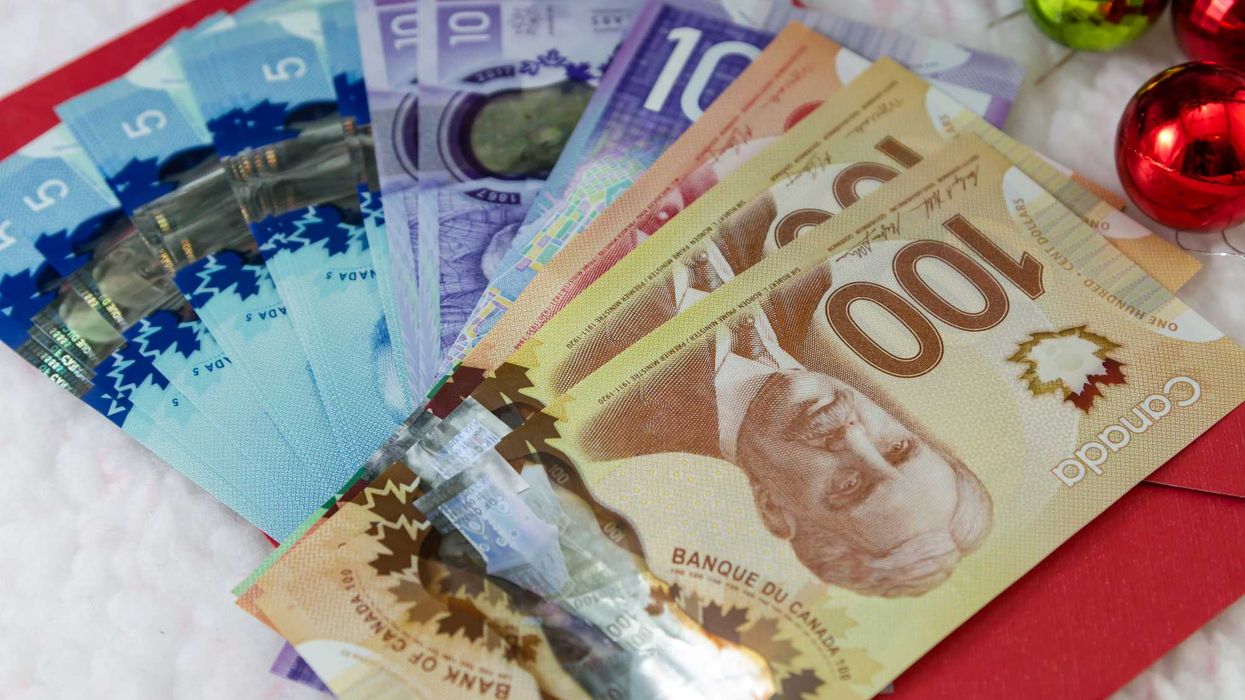
Canadians could get payments from these government payments in January 2026 — including a few that are increasing with the new year.
A brand new year is almost here, bringing with it a fresh batch of government benefit payments landing in Canadians' bank accounts in January 2026.
Whether you're receiving payments from the Canada Revenue Agency or Service Canada, a handful of major programs are set to roll out monthly or quarterly payments for families, seniors, workers and others who qualify.
These government benefits for January 2026 can offer a little extra help just as many Canadians face post-holiday bills and higher winter expenses.
For those already receiving monthly government support, don't worry — just because it's a new year doesn't mean your payments are going to reset or disappear. In fact, most government payments follow a July to June cycle, not the calendar year, so there are still six months left of payments before anything changes.
That said, a few programs are seeing inflation updates this month thanks to the new calendar year, so some Canadians might notice their January 2026 payments are a bit higher than they were in 2025.
If you're eligible, most deposits are automatic — but the amount you get can vary based on things like your income, province and family situation.
Not sure what's coming your way or when? Here's a full breakdown of eight federal government benefit payments for January 2026, including payment dates, eligibility details and how much money you could get.
GST/HST Credit
The GST/HST Credit is a tax-free payment sent out every three months by the CRA to help lower-income Canadians offset the cost of federal sales tax. It's meant to ease the financial impact of the goods and services tax (GST) or harmonized sales tax (HST) charged on everyday purchases.
You don't need to apply separately — if you file your taxes and meet the eligibility rules, the CRA will figure out if you qualify. Generally, you must be at least 19 years old or have a spouse, common-law partner or child. You also need to be considered a resident of Canada for tax purposes at the start of the payment month.
How much you can get: This payment is part of the current benefit year that started in July 2025, so the quarterly payment maximums remain unchanged:
- $133.25 if you're single
- $174.50 for couples
- An extra $46 per child under 19
Some provinces and territories also add their own top-up, which could mean up to $545 more depending on where you live and your personal situation.
The CRA is still using your 2024 tax return to calculate eligibility for this benefit year. Payments begin to decrease once your adjusted family net income goes over $45,521, although you may still get a partial payment if you earn more than that.
Next payment date: January 5, 2026
Ontario Trillium Benefit
The Ontario Trillium Benefit (OTB) helps lower- and middle-income Ontarians cover daily living expenses. This tax-free monthly payment combines three provincial credits into one: the Ontario Energy and Property Tax Credit (OEPTC), the Northern Ontario Energy Credit (NOEC) and the Ontario Sales Tax Credit (OSTC).
Even though it's a provincial program, the OTB is delivered by the Canada Revenue Agency. For the first half of 2026, eligibility and how much you get are still determined based on your 2024 tax return.
How much you can get: For January 2026, the maximum monthly amounts are:
- OEPTC: Up to $106.91 if you're 18 to 64, or up to $121.75 if you're 65 or older. You could also receive an extra $23.75 if you live in a long-term care home or on a reserve.
- NOEC: Up to $15.41 for individuals, or $23.75 for families, in Northern Ontario.
- OSTC: Up to $30.91 for each eligible adult and dependent child under 19 in your household.
If your total benefit is $360 or less for the year, you likely received it as a one-time lump sum back in July instead of monthly payments.
Next payment date: January 9, 2026
Advanced Canada Workers Benefit
The Advanced Canada Workers Benefit (ACWB) is an early payment program that delivers part of the Canada Workers Benefit tax credit to eligible low-income workers throughout the year. It's meant to help working Canadians who earn less get some of their credit in advance, rather than waiting until they file their tax return.
Instead of receiving the full amount at tax time, the benefit is split — half comes with your tax refund, and the other half is paid in three advance instalments in July, October and January.
To qualify, you need to be a Canadian resident for the full year, be at least 19 years old (or living with a spouse, partner or child), and have working income below the limit set for your province.
How much you can get: For the January 2026 advance payment, the maximum amounts are:
- Up to $265 if you're single
- Up to $456.50 if you're part of a couple or family
- Up to $136.83 more if you're eligible for the disability supplement
People living in Alberta, Quebec or Nunavut may see different payments — in some spots, up to $500 more — as thresholds and benefit rates vary by province.
Next payment date: January 12, 2026
Canada Disability Benefit
The Canada Disability Benefit (CDB) is a monthly payment aimed at supporting working-age adults with disabilities. It launched in July 2025 and is available to Canadians aged 18 to 64 who qualify for the Disability Tax Credit (DTC).
Service Canada began issuing payments last summer, starting with those whose application was approved by June 30. If you were approved after that date, your first deposit may have arrived later — possibly with back pay for the months you missed. You can still apply if you're eligible and haven't yet.
How much you can get: The maximum monthly amount is $200, but the actual payment depends on your income and living situation. The lower your income, the higher your benefit tends to be.
If your total yearly amount adds up to less than $240, the CDB is paid out as a single lump sum instead of monthly instalments.
Next payment date: January 15, 2026
Canada Child Benefit
The Canada Child Benefit (CCB) is a monthly tax-free payment that helps families manage the cost of raising children under 18. It's issued by the CRA and goes to the parent or guardian who's primarily responsible for the child's care.
To be eligible, you must live with the child, be their main caregiver and be considered a Canadian resident for tax purposes. You or your spouse must also meet specific citizenship or immigration requirements, including being a Canadian citizen, permanent resident or protected person.
How much you can get: While a rate increase has been announced for 2026, it doesn't kick in until July — January's CCB payment is still based on your 2024 income as reported on your tax return and follows the existing rates.
For the 2025-26 benefit year, families earning less than $37,487 can receive the full monthly amounts:
- $666.41 for each child under 6
- $562.33 for each child aged 6 to 17
Families with higher incomes may still qualify, though their payments will be reduced as income increases.
Some provinces and territories add their own child benefit top-ups — up to $305.66 per child — which are combined into the same payment. If your child is eligible for the Disability Tax Credit, you could also receive an additional $284.25 per month through the Child Disability Benefit.
Next payment date: January 20, 2026
Canada Pension Plan
The Canada Pension Plan (CPP) provides monthly retirement income to Canadians who contributed to the plan during their working years. It's meant to replace part of your earnings after you retire, with your payment amount based on how long and how much you contributed to the plan.
If you worked in Quebec, you're covered under the Quebec Pension Plan (QPP), which is similar but managed separately. For those who've worked in both Quebec and other provinces, your contributions are combined to make sure nothing is missed.
Canadians CPP contributors might also be eligible for additional CPP-related benefits beyond the base pension, including disability benefits and supports for survivors and dependants.
You can apply for CPP as early as age 60, as long as you've made at least one valid contribution — either through employment or by credit splitting after a breakup or divorce.
How much you can get: The feds have announced that starting in January 2026, CPP benefit amounts are going up by 2.0%, based on the latest Consumer Price Index data.
While the exact benefit amounts for 2026 haven't been shared yet as of the time of writing, based on our calculations, the new monthly maximums are roughly:
- Base pension: Up to $1,461.66 per month if you start receiving CPP in 2026 at age 65
- Post-Retirement Benefit: Up to $50.38 per month (at age 65) if you're still working after starting CPP
- CPP Disability Benefit: Up to $1,706.70 monthly for people under 65 who are no longer able to work due to a serious long-term disability
- Post-Retirement Disability Benefit: An extra $610.46 each month for individuals aged 60 to 65 who become disabled after they've started receiving CPP
- Survivor's Pension: Up to $786.30 per month if you're under 65, or up to $877.00 if you're 65 or older, as the surviving spouse or common-law partner of a CPP contributor
- Children's Benefits: Monthly payments of $307.81 for children under 18 or full-time students under 26, or $153.91 for part-time students aged 18 to 25, if their parent has died or become disabled after contributing to CPP
Keep in mind these are rough estimates based on the December rates and the increase. More information on the exact payment amounts should be available from Service Canada soon.
Most people receive less than the maximum. If you're eligible for more than one of these benefits, your total monthly amount may not add up to the sum of all the individual maximums. You can check your estimated payments by logging into your My Service Canada Account.
Next payment date: January 28, 2026
Old Age Security
Old Age Security (OAS) is a monthly pension for seniors aged 65 and up, separate from the Canada Pension Plan. You don't need to have worked or contributed to qualify — eligibility depends on your age, how long you've lived in Canada as an adult and your income.
To receive OAS, you must be at least 65 years old and have lived in Canada for at least 10 years after turning 18. If you're applying from outside the country, the minimum jumps to 20 years.
Your net world income also needs to be below a set limit: $148,451 if you're between 65 and 74, or $154,196 if you're 75 or older.
OAS includes three additional programs:
- Guaranteed Income Supplement (GIS): Extra support for low-income seniors receiving OAS
- Allowance: For those aged 60 to 64 whose spouse or common-law partner gets GIS
- Allowance for the Survivor: For widowed individuals aged 60 to 64
How much you can get: OAS amounts are reviewed every three months and adjusted for inflation as necessary. Starting January 2026, Service Canada has announced that rates are rising by 0.3%. Over the past year, that adds up to a 2.0% increase in total — consistent with the annual 2026 increase for tax brackets and other benefits.
While the exact amounts haven't been published yet as of the time of writing, based on the increase rate, here's a rough estimate of the new monthly maximums:
- OAS pension: Up to $742.31 per month for those aged 65 to 74, or up to $816.54 monthly if you're 75 or older
- GIS: Up to $1,108.75 for single, widowed or divorced seniors, or up to $667.41 if your spouse or partner also receives OAS or the Allowance
- Allowance: Up to $1,409.72 if you're aged 60 to 64 and your partner receives GIS
- Allowance for the Survivor: Up to $1,680.48 for eligible widowed individuals aged 60 to 64
Don't forget — these are educated guesses based on the December rates and the increase, so the real amounts may vary slightly. More precise numbers should be available from Service Canada soon.
If you lived in Canada for less than 40 years after age 18, you'll receive a partial pension. You can estimate your benefit using the OAS calculator on the Service Canada website.
Next payment date: January 28, 2026
Veteran Disability Pension
The Veteran Disability Pension is a lifelong, tax-free payment for former members of the Canadian Armed Forces whose health was affected by their military service. It supports veterans living with physical or mental health conditions tied to their time in training, deployment or active duty.
The benefit is administered by Veterans Affairs Canada, but payments are handled by Service Canada. In addition to current and former CAF members, eligibility may extend to veterans of the Second World War and Korean War, some RCMP officers and civilians who contributed to Canada's war efforts during the Second World War.
To qualify, you must have a medical condition officially diagnosed and directly linked to your military service. Once you're approved, the pension is paid for life.
How much you can get: Your payment depends on the severity of your condition — not your income or assets. In 2025, the maximum monthly payment for a Class 1 disability (the most severe) was $3,444.59. If you have dependants, you may be eligible for additional amounts.
While there's no confirmed increase yet for 2026, payments typically rise with inflation. Based on a projected 2.0% adjustment, the estimated maximum could reach around $3,513.48, though this has not been officially announced.
Next payment date: TBA, but likely January 29, 2026, based on past schedules — usually the second-last business day of the month.
READ NEXT: Canada's 2026 federal income tax brackets are out — Here's how much you'll pay next year
AI tools may have been used to support the creation or distribution of this content; however, it has been carefully edited and fact-checked by a member of Narcity's Editorial team. For more information on our use of AI, please visit our Editorial Standards page.
- Canada's 2026 federal income tax brackets are out — Here's how much you'll pay next year ›
- The CRA is increasing the Canada Child Benefit — Here's how much you can get in 2026 ›
- 13 updates from the new federal budget that you might actually care about ›
- Ontario residents can get over $190 from the CRA in this January government payment - Narcity ›
- Canadian workers can get up to $730 from this CRA benefit payment in January 2026 - Narcity ›
- Canada Child Benefit payments for January 2026 go out soon — Here's how much you can get - Narcity ›