An Invasive Plant Is Attacking Ontario's Forest & Some Say You Can Use It To Make Pesto
It smells like garlic.
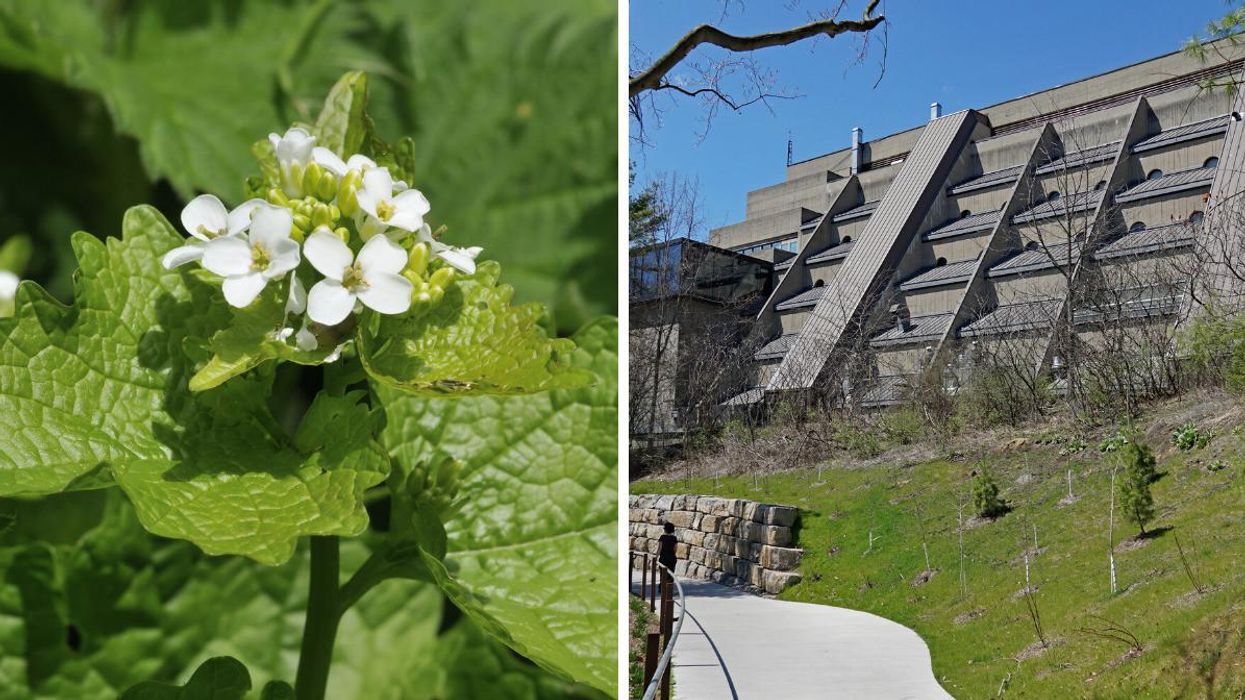
A garlic mustard plant. Right: A Toronto hiking trail.
Imagine you could help Ontario's environment simply by eating delicious pesto pasta? What a treat that would be, right? Well, throw away your meal plan because it's real, folks.
According to The Weather Network, garlic mustard, an aggressive forest invader currently wreaking havoc on the province's green spaces, needs to be eliminated, and yes, you could potentially use it to make pesto.
A warning on the Government of Ontario website states that the plant, although delicious, threatens several of Ontario's native species, including American ginseng, drooping trillium, Eastern false rue-anemone, hoary mountain mint, white wood aster, wild hyacinth, and wood poppy.
The problem plant spreads quickly and lays roots that change the chemistry of the soil, thus preventing the growth of other important foliage.
The species also produces chemicals that deter herbivores from eating the plant, which creates all sorts of population issues.
"Garlic mustard can invade relatively undisturbed forests," the government warns. "Once established it can displace native wildflowers like trilliums (Trillium sp.) and trout lily (Erythronium americanum). It hinders other plants by interfering with the growth of fungi that bring nutrients to the roots of the plants."
If you want to join the cause and try making some wild plant pesto, it's worth noting that the plant can be identified by its strong garlic odour when crushed and its white flowers with four tiny petals.
TWN says "if you find garlic mustard on private property, it's likely safe to eat." Apparently, the plant can replace basil and make for a really good pesto.
Residents are also encouraged to call the Invading Species Hotline at 1-800-563-7711 if they spot garlic mustard or other invasive species while strolling through the wild.
If not removed, the species can stay in the soil for 30 years. That's a lot of untapped green sauce.