Toronto drivers can be fined $615 for breaking this rule and the city is cracking down
Police have fined over 8,600 divers in the last six weeks. 😳
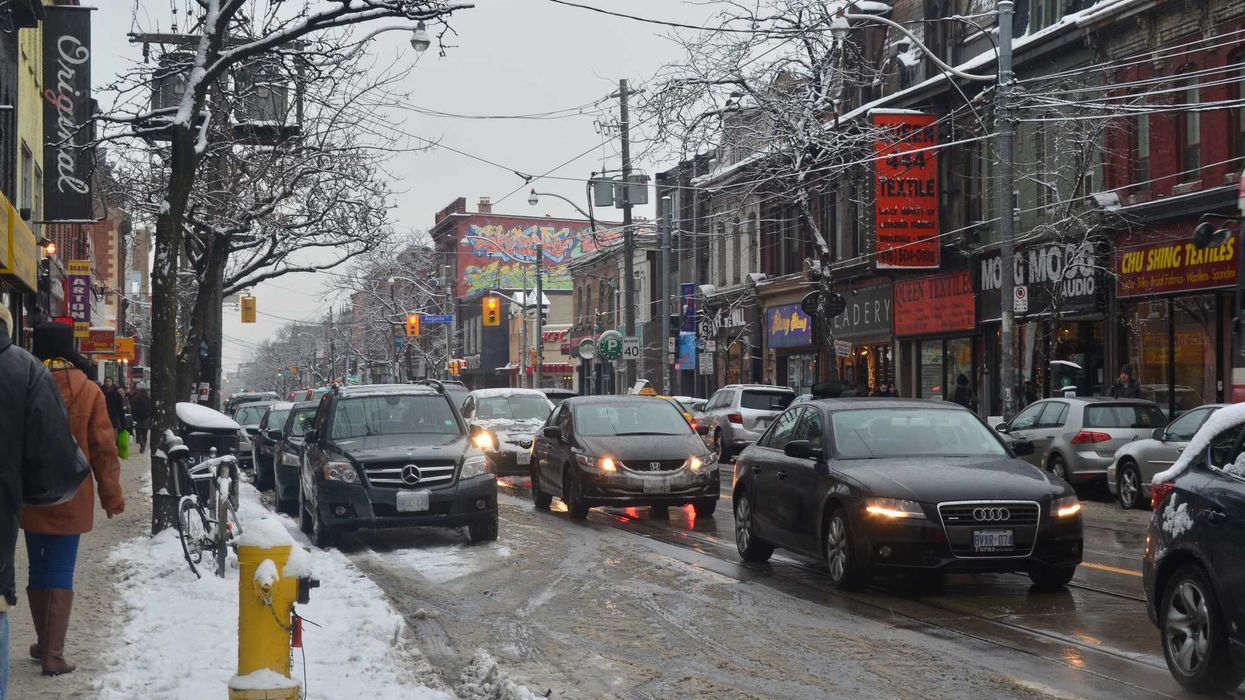
Over 8,600 Toronto drivers have been fined up to $615 in a city crackdown on these rush-hour traffic laws.
If you've ever been stuck in downtown Toronto traffic, you know the frustration of gridlock all too well.
While congestion is to be expected in any big city, the issue is made worse by cars ignoring basic rules, like stopping where they shouldn't and clogging intersections when the light changes.
Now, drivers could face serious consequences for adding to the chaos — including fines that reach over $615.
Toronto Police and the City are stepping up enforcement of multiple traffic laws this season, with a special focus on the "most congestion-causing violations," including one you might not even know is illegal: "blocking the box."
READ ALSO: Ontario drivers could be fined up to $2,500 for missing this little-known licence plate rule
Blocking the box — also known as an improper stop at an intersection — happens when a driver enters an intersection on a green or yellow light without enough space to exit before the light turns red.
This can clog up the intersection to cross traffic for an entire light cycle, and can force cyclists and pedestrians into live traffic. It's a major safety issue and one of the biggest contributors to downtown congestion, according to the City.
Back in September 2024, Toronto raised the fine for blocking the box to $450 (or $500 in a community safety zone), which can add up to an eye-watering $615 after fees.
And that's just one of several infractions being targeted in a major crackdown by the Toronto Police Service (TPS).
What's happening?
On Monday, TPS shared a mid-point update on its three-month traffic enforcement campaign that kicked off October 20. Officers from both Parking Enforcement and Traffic Services have been patrolling downtown streets between 3 p.m. and 7 p.m., Monday through Friday — right when traffic is at its worst.
The enforcement zone is the area between Bloor Street to the north and Front Street to the south, and from Bathurst Street to the west to Jarvis Street at the east. Basically, if you're driving pretty much anywhere in downtown Toronto during rush hour, you could see an increased police and by-law presence.
Officers are focusing enforcement on the "most congestion-causing behaviours," TPS says, which includes things like stopping and parking violations and blocking the box.
They're also on the lookout for safety issues, "with an emphasis on prohibited turns, speeding, distracted driving, and traffic signal violations," according to the Monday press release.
So far, TPS says officers have handed out over 8,600 parking and traffic tickets and had over 400 vehicles towed in the first six weeks of the blitz.
The campaign is part of Toronto’s Congestion Management Plan, and according to TPS, average travel times in the enforcement area have already improved — in some cases by over eight minutes.
What could you get fined for?
Here are some of the violations officers are cracking down on — and how much they could cost you.
No stopping
This one's strict. You can't stop your car for any reason — not even for a split second to drop off a passenger — in a no-stopping zone. Fines start around $75 for minor issues but can reach much higher. For example:
- Within 15 metres of a crosswalk: $75
- In front of a transit stop: $190
- In a bike lane or crosswalk: $200
- Time-based no-stopping zone during rush hour: $300
- In an accessible spot or loading zone without a permit: $450
No parking
Parking fines also vary a lot based on the violation, ranging from relatively small $30 tickets for overstaying the time you bought on a parking meter to hundreds of dollars:
- Too close to an intersection: $75
- Within 3 metres of a fire hydrant: $125
- In a fire route: $250
- In a bus loading zone: $300
- In an accessible spot or loading zone without a permit: $450
Blocking the box
- $450 at most intersections
- $500 in community safety zones
- Add in court fees and the mandatory victim fine surcharge, and you're looking at up to $615
Prohibited turns
A wrong turn could cost you between $85 and $150, depending on the location and safety risk. You'll want to look out carefully for no-left-turn signs, as more of them have been cropping up across the city to ease traffic on major transit routes like King Street.
As a provincial offence, improper turn tickets also come with court fees and victim fines, bringing tickets up to $180 all-in. They can also carry demerit points, which can raise the cost of your insurance for years.
Speeding
Speeding tickets are based on how fast you're going, with fines ranging from $2.50 to $12 per kilometre over the limit, plus court fees and victim fines.
Going 40 km/h or more over any speed limit under 80 km/h is also considered stunt driving, which can result in an immediate licence suspension, vehicle impoundment and fines starting at $2,000, plus even possible jail time.
Distracted driving
Using your phone or other handheld device while driving can cost you big time. Fines start at $500 for a first offence, and can reach up to $3,000 for repeat offenders. With court costs and victim fees, that means a range from $615 to over $3,700.
Traffic signal violations
Forgetting to signal a turn — or even a lane change — could cost between $85 and $120. With court costs and victim fines, that adds up to around $150.
What's the point?
The goal of the campaign, police say, is "to reduce gridlock, improve traffic flow, and enhance safety for everyone using Toronto’s roads."
TPS says this campaign is an intensification of their normal rush-hour enforcement. That means even once this specific blitz ends in mid-January, regular patrols will still be out there watching.
And with holiday shopping, winter weather and downtown events piling on pressure, now's a good time to brush up on Toronto's driving laws before you end up with a surprise ticket.
Blocking an intersection or making a quick illegal turn might seem in the moment like a harmless way to get that one inch further ahead in your commute, but it could cost you — and slow down everyone else too.
If you want to avoid a fine, follow the signs and stay alert. Your wallet (and your fellow drivers) will thank you.
What's your biggest Toronto rush hour pet peeve?
READ NEXT: 11 Ontario driving laws you might be breaking that carry fines up to $20K
- Ontario drivers could be fined up to $2,500 for missing this little-known licence plate rule ›
- 11 Ontario driving laws you might be breaking that carry fines up to $20K ›
- Toronto is about to get speed cameras in 49 new spots, despite Ford's plans to ban them ›
- Canada's most dangerous road for winter driving is in Ontario and the crash rate is wild - Narcity ›
- Toronto Police are offering $2,000 rewards for info on shoplifters but you'll have to act fast - Narcity ›
- Canada's worst cities for traffic were revealed and #1 isn't Toronto or Montreal - Narcity ›