Canada has issued travel advisories for 9 vacation hotspots, including the UK, US and Mexico
Travelling this summer? Get informed! 👀
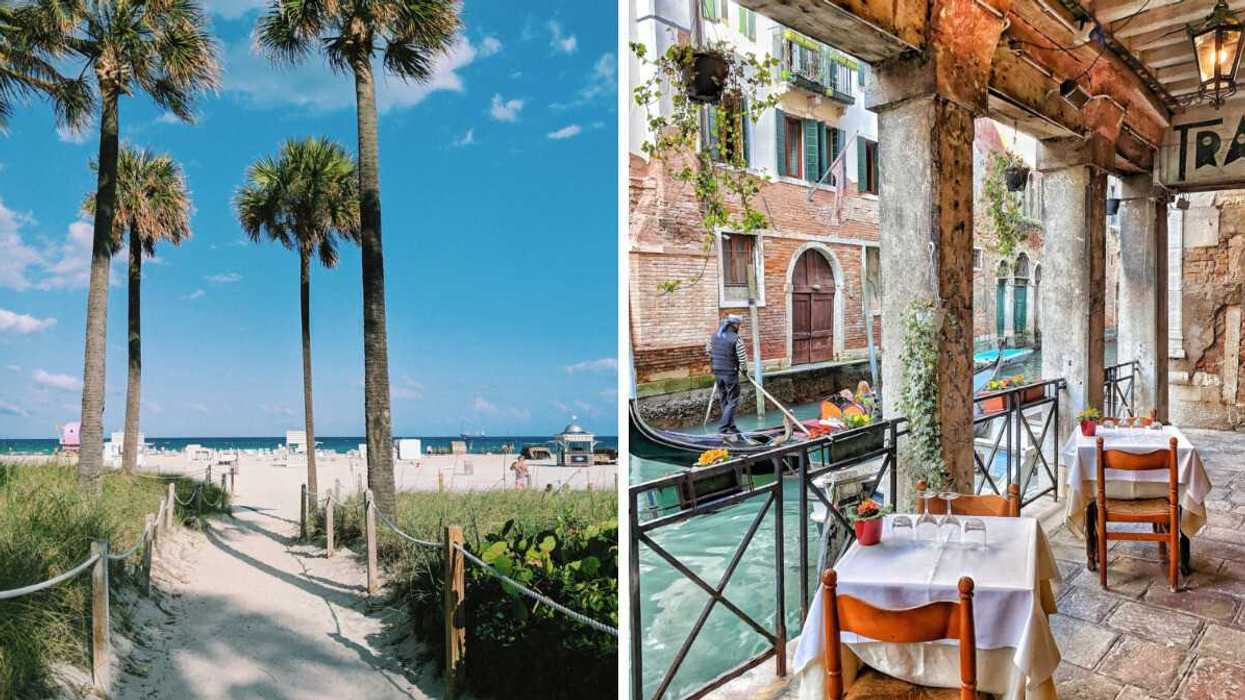
Canada travel warnings have been issued for the United States, Mexico, and more.
Planning summer travel or eyeing cheap flights for a summer getaway? You might want to check Canada's latest travel advisories before you book — just in case.
The Government of Canada has issued travel warnings for nine popular destinations — including updated advisories for the United States and Mexico, which are hosting FIFA World Cup 2026 matches this June and July.
Other spots on the list include Caribbean favourites like Cuba, the Bahamas, Jamaica, and the Dominican Republic, along with major European destinations like the U.K., France and Italy.
These aren't all crisis-level warnings. In fact, most fall under "exercise a high degree of caution," which means travel is still possible, but you need to be aware of specific risks. However, Cuba's advisory has been elevated to "avoid non-essential travel" due to severe shortages affecting even resort areas.
Canada's travel advisory system uses four risk levels: "Take normal security precautions," "Exercise a high degree of caution," "Avoid non-essential travel," and "Avoid all travel." Understanding where your destination sits on that scale can help you to prepare properly — and it matters for your insurance coverage too.
Whether you're planning a World Cup trip, booking an all-inclusive resort, or dreaming of exploring European cities, here's what you need to know about Canada's current travel advice.
The Bahamas
Last Updated: May 4, 2026
Risk Level: Exercise a high degree of caution in The Bahamas due to high rates of crime, especially in Nassau and Freeport.
Details: The Bahamas attracts Canadians year-round with its clear waters and beachfront resorts, but crime remains a significant issue — especially on New Providence and Grand Bahama.
Nassau and Freeport report the highest crime rates, including armed robbery, burglary, fraud, and sexual assault. These incidents occur in resort areas, cruise terminals, and tourist districts at all hours, not only after dark.
The country also has a high murder rate, though most violent crime happens in non-tourist areas of downtown Nassau.
Petty crime — pickpocketing, bag snatching, and theft on beaches — is widespread and spikes during holidays and festivals. Keep belongings with you, limit the cash you carry, and stay alert at ATMs.
Officials recommend staying in well-populated tourist areas, avoiding secluded beaches (particularly after dark), and keeping all doors and windows locked.
Jamaica
Last Updated: May 4, 2026
Risk Level: Exercise a high degree of caution in Jamaica due to the high level of violent crime, particularly outside tourist areas.
Details: Jamaica's beaches and cultural draw make it a popular Caribbean destination for Canadians, but violent crime remains a serious concern in some areas of the country.
Armed robbery and murder are ongoing issues in parts of Kingston, Montego Bay, St. Catherine, and May Pen, where gang activity is common and firearms are frequently involved. Police maintain a presence in tourist areas and resorts, though assaults and robberies still happen there.
Police checkpoints are frequent across the country, including along the A1 North Coast Highway. Keep a valid ID with you, follow officers' instructions, and build in extra travel time to account for stops.
Sexual assaults have been reported at tourist resorts too, with some incidents involving resort staff. Smaller or more isolated properties carry higher risk — gated, guarded accommodations are generally the safest option, according to officials.
The Government of Canada also notes that same-sex sexual acts are illegal in Jamaica. 2SLGBTQI+ travellers have faced harassment and physical violence and should weigh these risks carefully before travelling.
Jamaica Travel Advisory
France
Last Updated: May 6, 2026
Risk Level: Exercise a high degree of caution in France due to the threat of terrorism.
Details: France currently operates under its highest terrorism threat level — level 3, "urgence attentat" (attack emergency) — within the French government's Vigipirate system. Attacks have occurred in France previously, and further attacks remain possible.
Possible targets include government buildings, schools, places of worship, cultural sites like concert halls and nightclubs, airports, transport hubs, and tourist-heavy public areas — especially in Paris. Canadian officials say travellers should remain particularly alert during sporting events, public celebrations, major political gatherings, and religious holidays.
Under Operation Sentinelle, heightened police and military presence is maintained permanently in public spaces.
Petty crime is also widespread, especially in major cities. Pickpocketing, bag snatching, and phone theft occur frequently at tourist attractions, in hotel lobbies, on public transport, and on international rail lines including Paris-Brussels-Amsterdam and Paris-London. Thieves commonly operate in groups and rely on distraction techniques.
Violent crime targeting tourists is less frequent but does happen, particularly near major tourist sites, around railway stations, on RER trains, and outside bars and clubs at night.
Italy
Last Updated: May 5, 2026
Risk Level: Exercise a high degree of caution in Italy due to the threat of terrorism.
Details: Italy remains a popular choice for Canadian travellers, but the Government of Canada cautions that terrorism is an ongoing threat throughout Europe, and Italy is not exempt from that risk.
Like in France, possible terrorism targets include government buildings, places of worship, airports, transport hubs, and tourist-frequented public spaces like restaurants, bars, shopping centres, markets, and hotels.
Canadian officials recommend heightened vigilance during sporting events, religious holidays, and public celebrations. Police and military presence typically increases in public areas and at major landmarks during these times.
Petty crime is also common across Italy, according to the Government of Canada. Pickpocketing and bag snatching happen regularly in crowded tourist spots, on buses and trains, and at stations and airports.
Thieves frequently use distraction methods — spilling drinks, striking up conversations, or offering unwanted assistance. Criminals on scooters also snatch bags from pedestrians and reach into cars stopped at traffic lights.
Dominican Republic
Last Updated: May 20, 2026
Risk Level: Exercise a high degree of caution in the Dominican Republic due to crime.
Details: Canadians continue to flock to the Dominican Republic for its beaches and all-inclusive resorts, but crime remains a widespread issue throughout much of the country.
Drive-by robberies are especially prevalent, with thieves on motorcycles or scooters grabbing bags from pedestrians or reaching into cars at stoplights. These incidents occur at resorts, airports, beaches, and on public transportation. Hotel safes and checked baggage have been compromised as well.
Violent crime, including armed robbery and assault, happens primarily after dark in larger cities. Criminals also target vehicles on the road, so try to schedule arrivals and departures during daylight when possible. The Government of Canada notes that police response times can be lengthy, particularly outside tourist zones.
Sexual assaults have occurred at major resorts and hotels, with some cases involving staff members. Stay away from isolated areas, even within resort properties, and exercise caution around unfamiliar people.
Card skimming and ATM fraud are also frequent — stick to machines located inside banks or businesses, shield your PIN, and check your accounts regularly.
The border area with Haiti, especially near Dajabón, is volatile and should be avoided completely. Land and sea crossings there are closed to travellers.
Dominican Republic Travel Advisory
United States
Last Updated: May 13, 2026
Risk Level: Take normal security precautions in the United States.
Details: The United States has Canada's lowest advisory designation — Take Normal Security Precautions — but specific concerns remain relevant to the FIFA World Cup 2026, which the U.S. is co-hosting from June 11 to July 19.
The Government of Canada points out that mass gatherings can become violent without warning, lead to traffic and transit delays, and present targets for terrorist attacks.
Large crowds also carry risks of stampedes, and local officials may introduce curfews on short notice. Scammers and pickpockets frequently exploit crowded events to target tourists.
The U.S. travel advisory also notes that mass shootings happen throughout the country, and while tourists are seldom involved, there's a possibility of being in the wrong location at the wrong moment. Firearm ownership is widespread, and open carry is legal in many states.
Cuba
Last Updated: May 20, 2026
Risk Level: Avoid non-essential travel to Cuba due to worsening shortages of fuel, electricity, and basic necessities including food, water, and medicine.
Details: Earlier this year, the Government of Canada elevated Cuba's advisory to Avoid Non-Essential Travel. Many Canadian airlines have halted flights to Cuba indefinitely, and while some commercial flights via international carriers continue, those could be reduced with little warning.
Cuba faces ongoing and severe shortages of food, bottled water, medicine, fuel, and hard currency. Resorts have been impacted too, though when and how severely is hard to predict. Most major hotels rely on generators, but fuel scarcity may restrict their operation, disrupting food service, lighting, and water supply.
Scheduled daily power outages are implemented to ease pressure on the electrical grid, but unplanned nationwide blackouts can still happen and persist for over 24 hours.
Ground transportation remains heavily compromised. Public transit and taxis are often unavailable, and some visitors have been left stranded with rental cars when fuel runs out. Extended waits at gas stations have resulted in confrontations.
If you do choose to travel to Cuba, bring all necessary medications, toiletries, and additional supplies. Maintain stocks of water, food, and fuel, and keep a full emergency kit accessible at all times.
The United Kingdom
Last Updated: May 14, 2026
Risk Level: Exercise a high degree of caution in the United Kingdom due to the threat of terrorism.
Details: The United Kingdom is one of the most visited destinations for Canadian travellers, but the Government of Canada warns of an ongoing terrorism threat throughout the country.
Previous attacks have caused casualties and included random violent incidents in public spaces — knife attacks, vehicle attacks, and explosions. While these have occurred mainly in London, attacks have happened in other areas as well, and further incidents are likely.
Travellers should stay particularly alert during sporting events, religious holidays, public celebrations, and major political events.
The UK government maintains a public terrorism threat level system. The national level currently sits at 4 ("severe") on a 5-point scale, while Northern Ireland has a separate threat level of 3 ("substantial").
Demonstrations occur regularly across the UK and can escalate quickly. Past protests have led to violent clashes with security forces, assaults, riots, looting, and vandalism. They can also cause significant traffic and transit disruptions.
Petty crime is widespread. Pickpocketing and bag snatching happen frequently at tourist sites like Piccadilly Circus, Trafalgar Square, and Leicester Square, as well as at airports, on public transport, in hotel lobbies, and at outdoor cafés.
Mexico
Last Updated: May 13, 2026
Risk Level: Exercise a high degree of caution in Mexico due to high levels of criminal activity and kidnapping.
Details: Mexico will host multiple FIFA World Cup 2026 matches, expected to bring hundreds of thousands of visitors this summer — but the Government of Canada urges travellers to take serious precautions before making the trip.
Crime rates are elevated throughout the country. The advisory recommends avoiding non-essential travel to several states, including Chihuahua, Sinaloa, Guerrero, Colima, Michoacán, and portions of Jalisco — regions where cartel violence and armed confrontations happen frequently, often with no warning.
Violent incidents have occurred even in major cities and tourist areas, including at hotels, restaurants, and nightclubs. Kidnapping is another major risk, including express kidnappings where victims are compelled to withdraw money from ATMs.
Armed robberies and carjackings are also common, and some offenders have impersonated police officers or taxi drivers.
If you're entering from the U.S., the Canadian government suggests flying instead of using land border crossings, where criminal activity is prevalent.
Petty crime such as pickpocketing and bag-snatching is also rampant, especially in crowded spaces, transit stations, and at large public events — precisely the type of gatherings World Cup matches will generate.
Travel advisories can change quickly, so it's worth checking the Government of Canada's travel advice page before you leave — and again closer to your departure date. If you're heading somewhere with an active advisory, make sure to confirm what your travel insurance covers before you go.
Safe travels, Canada!
READ NEXT: The feds just issued new travel advice for all Canadians going abroad this summer
AI tools may have been used to support the creation or distribution of this content; however, it has been carefully edited and fact-checked by a member of Narcity's Editorial team. For more information on our use of AI, please visit our Editorial Standards page.