Canadian Expert Says Wintery Weather Will Make Virus Stronger And Live Longer
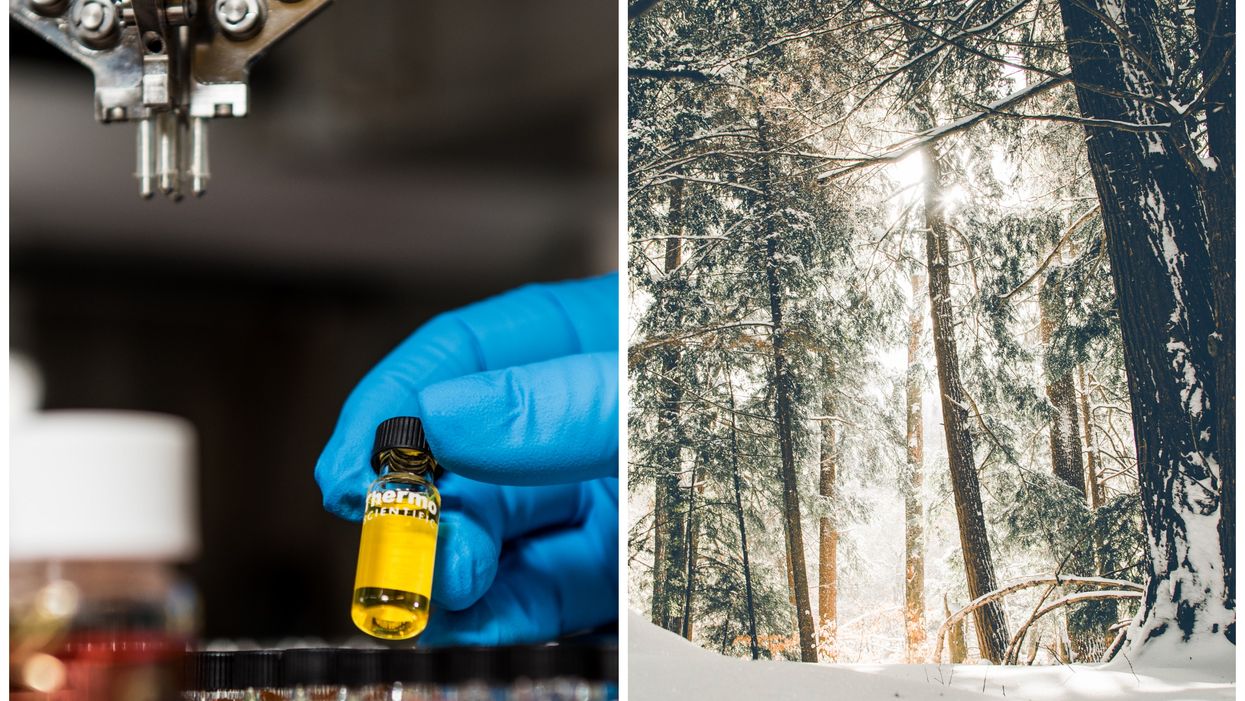
Coronavirus is just getting started. That's what an infection control epidemiologist said as temperatures drop increasingly and COVID-19 cases drastically go up.
We can now confidently say that Canada is experiencing its second wave of the virus, confirmed by Justin Trudeau's throne speech on Wednesday and countless prominent health officials.
This now begs the questions, will Canada see an even worse outcome come winter?
Colin Furness, an infection control epidemiologist and assistant professor at the University of Toronto, said the short answer is yes.
Editor's Choice: Canada Has Approved A Portable COVID-19 Testing Device That Gives Results in 90 Minutes
Furness confirmed to Narcity that as the weather becomes more chilly, the virus risks sitting in the air longer.
He says that as the virus exits a person's body either by coughing or sneezing, the wintery air will actually help preserve it and keep it alive for a longer period of time.
In other words, he says cooler air is also drier air, and when you exhale droplets in summer weather, the droplets collect moisture, get heavier and then they fall.
But in dry air, the opposite happens.
"The droplets evaporate quickly, get lighter, and stay in the air longer," he said.
Cold temperature also means that the virus in those droplets in the air or settled on surfaces can live much longer too.
As the flu season approaches and more people potentially get sick due to the shift in weather, things just aren't looking good.
The Public Health Agency of Canada said droplet transmission undoubtedly contains the coronavirus if it comes from an infected person, which then can reach the "mucous membrane" of another person and infect them too.
Since COVID-19 sits in the air longer when it's dry chances of contracting it go up, especially if you live in colder regions of the globe, proving to be really bad news for Canadians.
However, Furness says because this is a new virus, we can’t say with complete and utter certainty what will be the impact of our super cold winter weather.
"I do expect it will be much, much worse. Every day gets a bit more dangerous with COVID solely because winter is approaching," he said.
"However, remember that we are now using masks and physical distancing, which could more than compensate. Or not. This we don’t just don’t know."