These Fish Are On Drugs In South Florida & 58 Different Medications Were Found
It's a fishy situation.
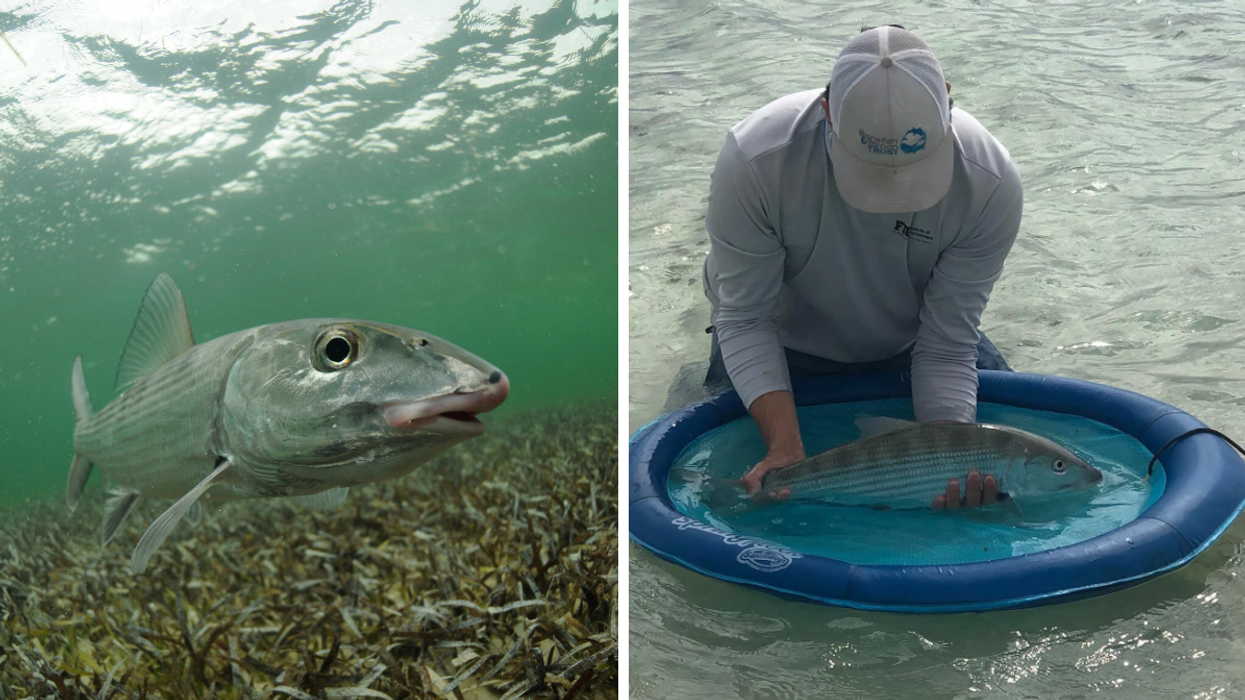
A bonefish in the water. Right: The Bonefish & Tarpon Trust conducting the study.
Fish in Florida are on drugs, according to a study conducted by Florida International University and the Bonefish & Tarpon Trust.
The research team checked out 93 different bonefish in Biscayne Bay and the Keys over the last three years, and it seems it's coming from the wastewater.
According to MSN, when we take pharmaceutical drugs, the excess that doesn't process in our bodies gets left behind in the toilet.
The medications that were detected frequently were blood pressure medications, antidepressants, prostate medications, antibiotics and pain relievers.
Some of the lesser-found drugs were heart medications, antihistamines, antifungal and stomach medications, and opioids.
In most of the 93 bonefish, seven different types of meds were detected as the average, but one fish had as many as 17. In total, 58 different pharmaceuticals were found in the sea life.
The drugs weren't only found in the bonefish, but also in their prey, such as crab, shrimp and other fish, so it's starting to affect the food chain.
"These findings are truly alarming. Pharmaceuticals are an invisible threat, unlike algal blooms or turbid waters. Yet these results tell us that they are a formidable threat to our fisheries, and highlight the pressing need to address our longstanding wastewater infrastructure issues," said lead researcher Jennifer Rehage.
The study acknowledges that over the last three years, Florida Governor Ron DeSantis has put $2 billion toward water quality improvements in the state.
However, for Floridians, the issue can affect jobs and is specifically becoming a "significant threat" to the flats fishery, a saltwater fishery that brings in over $9 billion per year and employs over 88,500 people.
It's reported that more studies are being conducted to further see what can be done to improve the quality of water.
This article's left-hand cover image was used for illustrative purposes only.
- This Man Caught A Rare 13 Foot Sawfish In Florida Waters & He ... ›
- Ontario Police Arrest 25 People & Seize $1.7M In Drugs After Major Year-Long Investigation - Narcity ›
- A Woman Got Stabbed By A Sailfish While She Was Fishing In Florida & It Was 100 lbs. - Narcity ›
- Florida Fish Were Found On Drugs & Humans Are To Blame - Narcity ›