8 Ontario snow laws you might not know you can get fined up to $2,000 for breaking
Some of them also have time limits — so you'd better get shovelling. ❄️⏳
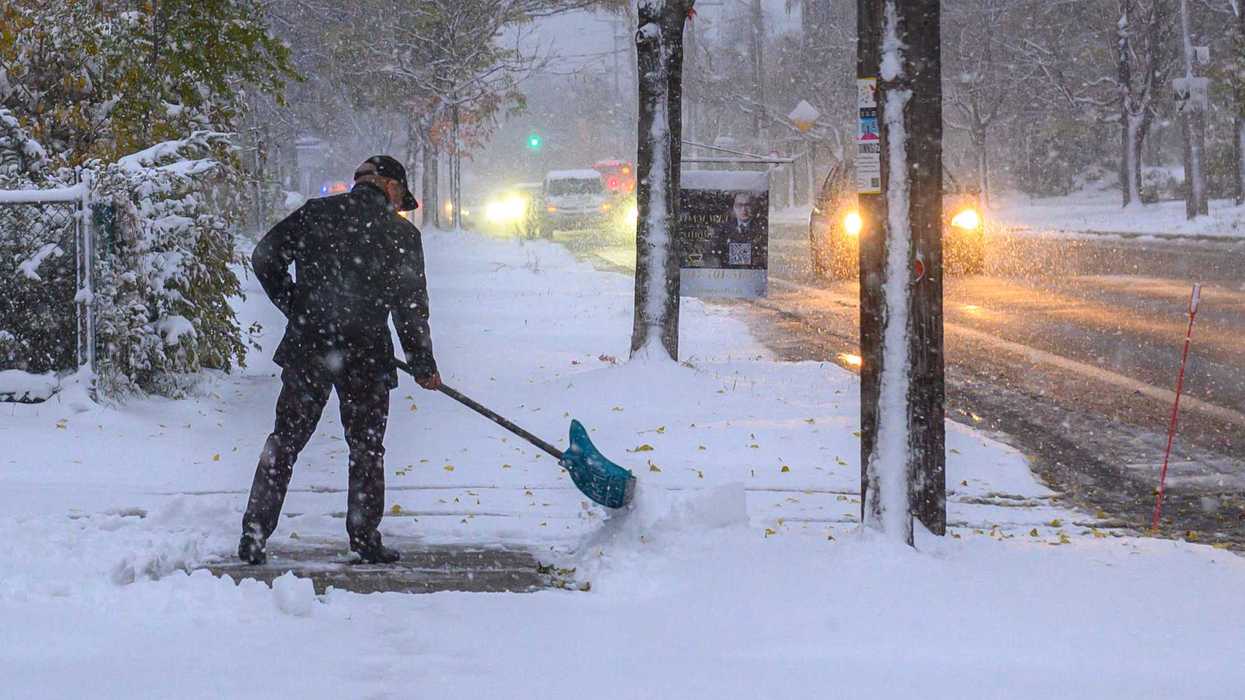
You could face fines of hundreds or even thousands of dollars for breaking one of these little-known snow-related laws in Ontario.
Ontario just got absolutely dumped on with snow — and unless you've been hiding under a rock (or snowbank), you've probably spent the past 24 hours digging yourself out of it.
Toronto alone saw 22 cm between Wednesday and Thursday, with a few other GTA spots like Markham getting up to a wild 45 cm, according to The Weather Network. And just when you thought the worst of it was over, another storm is on the way this weekend, bringing even more snow and frigid temps.
But while you're out there dodging snow plow–train crashes and drivers without snow tires, there's something else to keep in mind: snow laws.
Yep, Ontario has actual rules about what you can and can't do with that fluffy white stuff — and breaking them could cost you way more than just frostbite.
We're talking hefty fines, some of which can run you thousands of dollars — or worse.
READ ALSO: 9 reasons you can legally take time off work in Ontario without using vacation days
Some of these rules are buried in the Ontario Highway Traffic Act, others in city by-laws or even the fire code. But the thing they have in common? Most people don't even know they exist — until they get ticketed.
Whether you're blocking a sidewalk with snow from your driveway, leaving a hydrant buried, or trying to zip past a snowplow (don't do it), there's a good chance you're breaking the law without realizing it.
So before you find yourself hit with a surprise ticket, here are eight snow-related rules you need to know if you live (or drive) in Ontario this winter.
Not clearing off your car
Look, we get it. You're cold, running late, and scraping ice off your windshield is basically a winter arm workout. But if you hit the road with snow still covering your roof, hood or windows, you're breaking the law — and it might cost you more than just visibility.
Under Ontario's Highway Traffic Act (HTA), it's illegal to drive if your windows or windshield are obstructed by anything, including snow or ice. If you're caught driving with an obstructed view, each offence comes with a set fine of at least $85, plus fees.
But it doesn't stop there.
Any snow or ice on your vehicle that flies off while you're driving can count as an "insecure load" — just like if you had an uncovered trailer full of junk. That violation carries a fine of at least $130 (or $310 if you're driving a commercial vehicle).
And according to Ontario Provincial Police, in some cases, you could even be charged with careless driving. That's a serious offence, with fines ranging from $400 to $2,000 (or even more if it causes an accident), plus potential licence suspension and even jail time.
Bottom line: take the extra two minutes to clear off your car. Your wallet (and everyone else on the road) will thank you.
Dropping snow on the sidewalk or street
If you live in a neighbourhood where the driveway barely fits your car and your lawn is the size of a postage stamp, finding space for all that snow can feel like a game of Tetris. But while it might seem harmless to just push that snow out onto the road — especially if you figure the plow will just come by and scoop it up anyway — think again.
Under Ontario law, it's actually illegal to dump snow or ice onto a public roadway (or sidewalk, public laneway or walkway). That includes pushing it from your driveway onto the street in front of your house. The law applies whether you're using a shovel, a snowblower or even hiring someone else to do it for you. And yes, it still counts even if it's "just a little bit."
Doing this can get you slapped with a fine starting at $85 under the HTA, with even heftier fines tied to by-laws in many cities, including Toronto and Ottawa.
So keep the snow on your own property. It's not worth getting fined just to save a few minutes.
Parking where it interferes with snow clearing
When a big snowstorm hits, cities need room to clear the streets. If your car is in the way, you could end up with more than just a dusting of snow on your bumper — think tickets, towing and even impound fees.
In Ontario, it's illegal to park in a way that blocks traffic or interferes with snow clearing. That applies even if your car is parked legally under normal conditions. If it's stopping plows from doing their job, you can be charged — with fines under the HTA starting at $50 — or even towed at your own expense.
Plus, most Ontario cities also have their own winter parking rules on top of provincial law. Toronto, for example, can declare a "major snow storm condition" and ban parking on key routes altogether. Violating that ban can cost you up to $500.
Ottawa also enforces parking bans during snowfalls of 7 cm or more, with fines starting at $125.
Plus, in many cities, crews may also post temporary "no parking" signs for routine snowbank removal — and if your car's still there when the plows come, it's getting ticketed and towed.
Moral of the story? Always check before you park after (or during) a snowfall — and if you're not sure, play it safe and move your car. The snowplow doesn't care if you were "just running in for five minutes."
Not clearing your walkway or driveway
If you thought the choice to shovel (or not shovel) your own private property was fully up to you, think again. In most Ontario cities, you're actually required by law to clear snow and ice from your private property — and in many cases, it's not just the path or steps leading to your front door, but also your driveway, but also any driveways, patios and more.
The specific rules and time limits vary by city, but the general idea is the same: you need to keep your property safe and passable for both people and vehicles.
In Toronto, the city's by-law says owners or occupants must clear snow and ice from driveways, steps, landings, and walkways within 24 hours of snowfall. Violating the by-law could lead to a whopping $615 fine.
Ottawa has a similar rule. Its by-law says driveways and walkways must be kept free of snow and ice to ensure safe passage in bad weather — and again, you're on the hook if it's not taken care of properly.
Whether you rent or own, if you're responsible for a property, you're also responsible for keeping it safe during the winter.
Not clearing the sidewalk in front of your house (in some cities)
If you thought being forced to clear snow on your own property was bad, just wait — in some Ontario cities, you're also responsible for clearing the sidewalk in front of it. Yep, even though it's city property.
In Toronto, for example, homeowners and tenants are legally required to clear snow and ice from the sidewalk outside their building within 12 hours after a snowfall of 2 cm or less. If you don't, the city can step in, do the job for you, and send you the bill, plus a potential by-law fine.
The same rule exists in various other cities, including Hamilton, Vaughan and London. Meanwhile, places like Ottawa handle sidewalk clearing through city crews, so residents aren't required to do it themselves — unless you're in a posted exception zone.
Bottom line: before you leave the sidewalk buried, check your local by-laws.
Not treating slippery surfaces
And if you thought all that wasn't enough, some cities can also fine you just for leaving behind an icy patch.
In Toronto and many other Ontario cities, it's not enough to just shovel the snow. Once it's cleared, you're also responsible for making sure the surface underneath isn't dangerously slippery. That means spreading "ashes, sand, salt or some other suitable material" — and doing it immediately and as often as needed.
This applies to sidewalks in front of your home as well as to your own steps, walkways, driveway and any other part of your property people might walk or drive on. And yes, if you don't do it, the city can step in, fix the issue themselves and charge you for it, plus issue by-law fines.
It might feel like overkill, but it's all about safety. A single patch of black ice can cause serious injuries — and a serious hit to your wallet if you're found responsible.
Not clearing a fire hydrant next to your property
You've shovelled the driveway, salted the sidewalk, maybe even helped a neighbour dig out their car. But if there's a fire hydrant on or next to your property and it's buried under a snowbank, you're not off the hook just yet.
Under Ontario's Fire Code — as well as local by-laws in cities like Toronto and Ottawa — property owners are responsible for keeping hydrants clear and accessible at all times. That means snow, ice, trees, or anything else that might block access has to be removed, fast.
In Toronto, you're expected to keep at least 1.2 metres of space around a hydrant clear. Ottawa goes even further, requiring a full three-metre path from the curb, plus half a metre around the sides and back. In either case, if the city has to come out and clear it for you after giving notice, you'll be stuck with the bill.
So if you see one of those yellow hydrants peeking out from the snow near your place, don't assume it's someone else's job. Dig it out and keep it clear — it's the law, and it could make all the difference in an emergency.
Passing a snow plow
We get it — snow plows aren't exactly fast, and when you're stuck behind one with a clear-looking lane next door, it's tempting to zip around. But if you try that on a high-speed road in Ontario, you could be looking at a hefty fine.
According to the Highway Traffic Act, it's illegal to pass a snow plow when it's working in formation — known as "echelon" — on roads and highways where the speed limit is 80 km/h or higher. The rule is meant to keep drivers safe from reduced visibility, flying snow and the wide blade attachments that often extend into other lanes.
To pass legally, the entire lane you're using has to be 100% clear of the plow — including any blade or attachment. And realistically, that's rarely the case when plows are working together.
Break the rule, and you could be fined anywhere from $150 to $1,000, plus fees.
So if you're stuck behind one, your best move is to slow down, stay back, and let them do their job. You'll still get where you're going — and avoid a fine, or worse.
READ NEXT: Ontario recycling rules just changed — Here's everything you can now put in your blue bin
- Southern Ontario is forecast to get more snow this weekend with 'frigid cold' temperatures ›
- 9 reasons you can legally take time off work in Ontario without using vacation days ›
- Ontario just launched new pay transparency laws and they could impact your next job search ›
- Toronto had over 6,000 break-ins in 2025 and these neighbourhoods were the most targeted - Narcity ›