I ranked Canadian cities based on their liveability for people in their 20s and 30s
Hear me out!
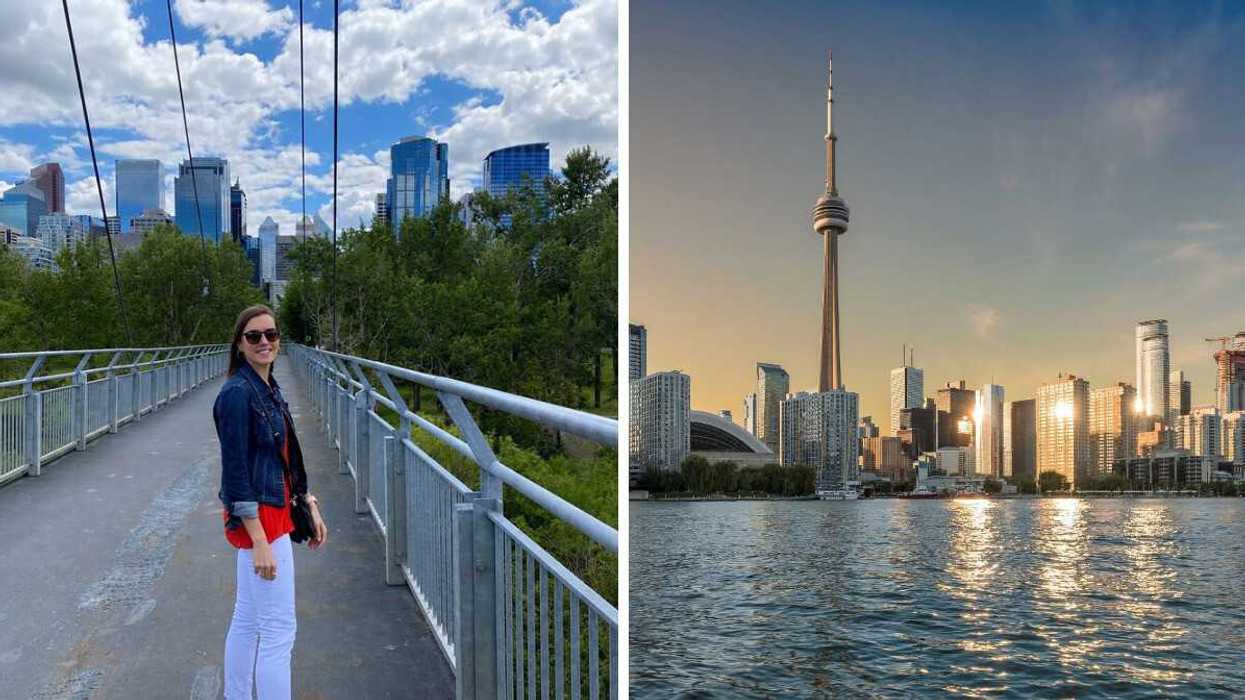
Asymina in a Canadian city. Right: Toronto.
Canada has no shortage of great cities, but not all of them are equally appealing when you're in your 20s and 30s and trying to build a life.
Having spent half of my 20s in Ontario and the other half in B.C., I've experienced firsthand how different Canadian cities can be. Some are packed with nightlife, career opportunities, and things to do, while others are quieter, more affordable, or offer easier access to nature.
So I wanted to know: Which Canadian city is actually the most liveable for people in their 20s and 30s?
To find out, I ranked eight cities based on factors that matter most to many young adults — including rent, grocery prices, the cost of a night out, and overall lifestyle. For lifestyle, I considered things like activities, weather, social scene, and the city's energy.
These rankings are based on my own experience, research and priorities — so I get it if you disagree. Just please don't come for me if your favourite city didn't make the top spot.
All cost comparisons come from Numbeo.com. Here's how they ranked.
#8. Edmonton
I've never been to Edmonton, but it consistently came up as one of Canada's most affordable big cities.
Based on my research and what friends who've lived there have told me, Edmonton offers many of the amenities you'd expect from a major city, including restaurants, festivals, and plenty to do. It may not have the same nightlife reputation as Toronto or Montreal, but it appears to have a strong local arts and festival scene, especially during the summer.
There's also West Edmonton Mall, where you can spend a few days exploring all that it has to offer!
The biggest drawback for me would be the weather. After spending years in Southern Ontario, I have no desire to experience an Edmonton winter, which is known for being long and brutally cold.
The city is also relatively isolated compared to other places on my list, with Calgary about three hours away.
On the affordability front, Edmonton does really well. For grocery costs, I checked the price of the same basic items in each city on my list: 1 L of milk, a loaf of white bread, a carton of 12 eggs, 1 kg of chicken fillets, 1 kg of white rice, and 1 kg of bananas. All of this came to $33.
A one-bedroom apartment averaged $1,517 per month. A night out, including dinner for one at a mid-range restaurant, two beers, and a 10km taxi ride for the entire night, costs roughly $96.
Conclusion: Edmonton landed at the bottom of my list because, while it excels in affordability, its nightlife, location, and overall lifestyle didn't stack up as strongly as those of the other cities I ranked.
#7. Victoria
I moved to Victoria 10 years ago when I was in my mid-20s, so I had to include it on the list.
Coming from the GTA, the slower pace of life was a big adjustment. Victoria isn't the kind of city where something is happening every night of the week. Instead, people spend their free time hiking, paddleboarding, biking and exploring the Gulf Islands.
It can also feel a bit isolating, since Victoria is on Vancouver Island, which means some things — like certain stores – are limited, and getting off the island can be expensive. While some people will find this frustrating, others say it adds to Victoria's charm.
The nightlife can feel pretty sleepy, but it's hard to beat the access to nature, mild weather and overall quality of life. I'd even argue it's one of the most beautiful places in Canada.
The catch? You're paying a premium for all of that.
When I first moved here, I paid around $1,100 a month in rent for an apartment just outside downtown. Today, the average rent for a one-bedroom apartment in the city sits at $2,234.
In Victoria, groceries averaged about $41 and a night out is roughly $93.
Conclusion: Victoria ranked seventh on the list because of the high cost of living, smaller job market, and quieter social scene, which outweighed its lifestyle perks.
That said, there's a reason I've stayed for a decade. If your idea of a perfect weekend involves hiking trails, ocean views and a slower pace of life rather than bar hopping and late nights, Victoria might actually rank much higher for you.
#6. Vancouver
Vancouver would top the list if I were ranking cities based on beauty alone. With mountain and ocean views and easy access to nature, it's one of the most stunning cities in Canada.
The winters are mild, which can be a big draw for anyone who dreads snow and sub-zero temperatures. That said, you'll need to make peace with the rain because Vancouver gets a lot of it.
The food scene is also incredible, with no shortage of restaurants and cuisines to try.
As you can see, this city has a lot going for it. Unfortunately, affordability is not one of those things.
The average rent for a one-bedroom apartment sits at $2,643, while a night out will set you back about $103. My grocery basket on Numbeo.com came to roughly $42.
Conclusion: Vancouver ranked sixth on my list because, despite its unbeatable scenery and lifestyle, the sky-high housing costs and relatively underwhelming nightlife make it harder to justify for many people in their 20s and 30s.
#5. Ottawa
I wasn't sure whether Ottawa would make this list, but the more I looked into it, the more I understood the appeal.
Compared to many major Canadian cities, Ottawa is more affordable. Rent for a one-bedroom apartment averages $2,071, while my grocery basket came to about $34. The city also offers plenty of government and tech jobs, making it an attractive option for people focused on building their careers.
Beyond work, Ottawa has a lot to offer outdoorsy types, with easy access to hiking, skiing, cycling, and other activities year-round.
Where it lost points for me is the social scene. While there are bars, restaurants and festivals, the nightlife feels much more low-key than what you'll find in Montreal, Toronto or Calgary. A night out costs just under $100, which isn't bad for Canadian standards.
Conclusion: Ottawa landed in the middle of my list because it offers a solid balance between affordability, career opportunities and quality of life. It doesn't have Vancouver's mountains or Montreal's nightlife, but the combination of relatively affordable housing and steady job opportunities helped it edge out some of the more expensive cities in my ranking.
#4. Toronto
I've spent a lot of time in Toronto, so I know just how much energy this city has for someone in their 20s and 30s.
Between the restaurants, bars, concerts, sporting events and endless things to do, it's easy to see why so many young people end up there.
It's also one of the best cities in Canada for career opportunities, making it an appealing place to build both a social and a professional life.
For grocery costs, the six items came to about $36. Rent for a one-bedroom apartment in the city centre averages $2,295, while my estimated night out costs roughly $122.
Conclusion: Toronto ranked fourth on my list because, while it excels in nightlife, job opportunities and things to do, its high cost of living kept it from breaking into the top three.
#3. Halifax
I was kind of surprised by Halifax's ranking, but after doing some research, I think it's earned its spot at number three.
I visited Halifax while I was still living in Ontario, and I remember really enjoying the coastal lifestyle and slower pace compared to larger cities. It feels like a mix of a small city and a student hub, with a youthful energy that stands out.
The city has a strong identity, from its Maritime history to its walkable downtown, live music scene and pub culture.
It also performs well in terms of affordability compared to most major Canadian cities. Rent for a one-bedroom averages $2,044 per month, a night out is around $81, and the six grocery items will cost you $37.
Conclusion: Halifax ranked third because it strikes a rare balance: it's affordable, social and fun without the high cost or intensity of larger cities.
#2. Montreal
I visited Montreal with a group of my girlfriends years ago, and I thought the city was both beautiful and fun.
As someone who loves going to Europe, I found Old Montreal a huge highlight for me, with its cobblestone streets, culture, boutiques, and cafes. It's even nicknamed the Paris of North America, which feels pretty fitting once you're walking around downtown.
Its nightlife scene is one of the best in Canada, with many restaurants, a packed festival calendar and a strong cultural energy year-round. On top of that, rent is noticeably more affordable than cities like Vancouver and Toronto.
Rent for a one-bedroom averages about $1,806, groceries come to roughly $37, and a night out is just under $100.
Conclusion: Montreal easily earned its spot at number two because it delivers on almost every front for people in their 20s and 30s: lifestyle, culture, affordability and entertainment. The only real drawback, in my opinion, is that not speaking French can be a barrier for certain jobs. So unless you're willing to learn the language, that may make someone reconsider the move.
#1. Calgary
Calgary ultimately took the top spot on my list because it offers a balance of affordability, opportunity and lifestyle that's hard to beat in Canada right now.
I visited Calgary for the first time a few years ago, and after I left, I genuinely knew I could see myself living there. My partner and I had a great time exploring downtown, and it's been on our list to go back ever since.
The city has a strong restaurant and nightlife scene, plenty of young people downtown, and a solid job market. One of its biggest draws, though, is the access to the Rockies. Imagine the stunning weekend trips you can go on!
For people in their 20s and 30s, affordability is also a huge draw. Compared to cities like Toronto and Vancouver, your money stretches much further. In this economy, that is a big deal.
Rent for a one-bedroom averages about $1,888, groceries come to roughly $35 and a night out costs around $87.
Conclusion: I went back and forth between Calgary and Montreal for the top spot, but Calgary edged it out because the Alberta city delivers a better overall balance of lifestyle, opportunity and cost of living.
The views expressed in this Opinion article are the author’s own and do not necessarily reflect the views of Narcity Media.