Feds Say The 'Consequences' For Joining Blockades Include Frozen Bank Accounts & Jail Time
"This is about following the money."
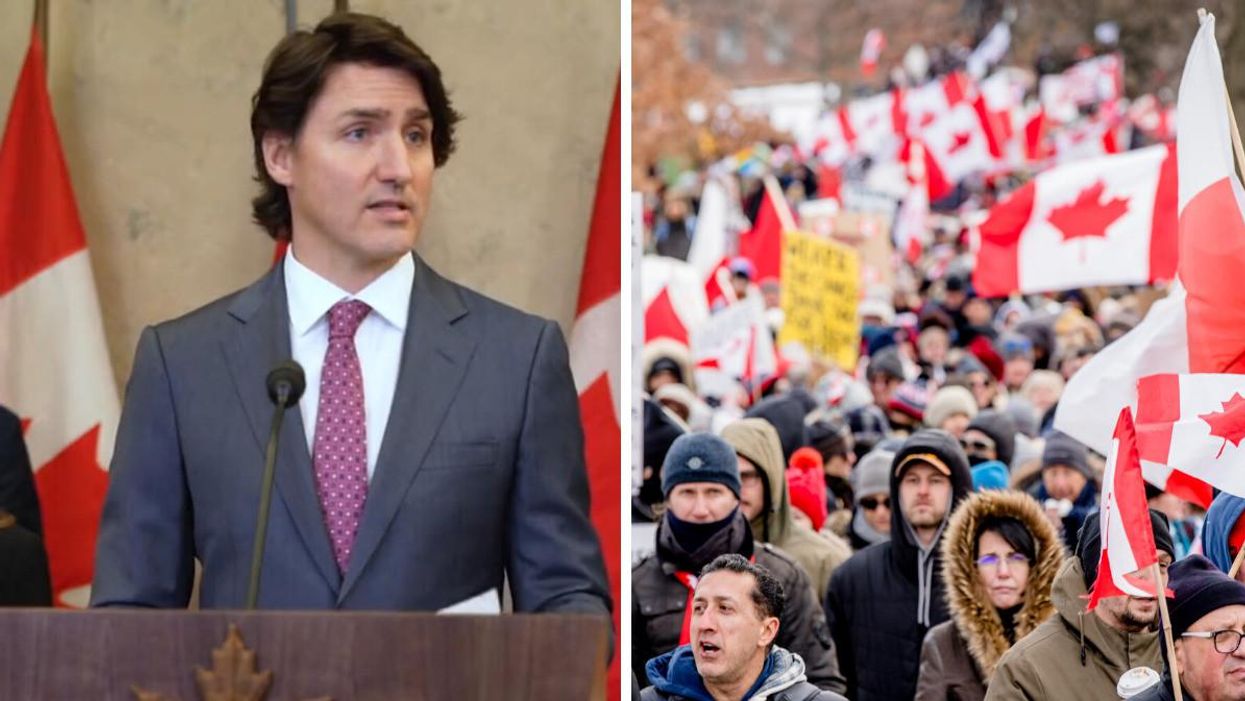
The federal government has laid out the consequences for those involved in blockades and protests in Canada and they include jail time, revoked licences and even frozen bank accounts.
On February 14, Prime Minister Justin Trudeau invoked the Emergencies Act, which his government says will mean more extensive consequences for those participating in blockades.
The act gives the feds, among other things, the ability to regulate and prohibit travel to, from or within any area for safety reasons, regulate and distribute essential goods, impose fines of up to $500, and even imprison people for up to six months.
In a press conference, Trudeau also outlined that the Emergencies Act will provide the government with the ability to "supplement provincial and territorial capacity to address the blockades and occupations."
"Financial institutions will be authorized or directed to render essential services to help address the situation, including by regulating or prohibiting the use of property to fund or support illegal blockades," added the prime minister.
The act gives the government the ability to share information with banking institutions and — according to a statement from Freeland — for financial institutions to "temporarily cease providing financial services where the institution suspects that an account is being used to further the illegal blockades and occupations."
This order covers both personal and corporate accounts.
"We are today serving notice: if your truck is being used in these protests, your corporate accounts will be frozen. The insurance on your vehicle will be suspended," read the notice.
"Send your semi-trailers home. The Canadian economy needs them to be doing legitimate work, not to be illegally making us all poorer."
On Monday, the feds revealed that the border blockades happening across Canada are costing the nation millions of dollars each day in trade.
Blockade protests have been happening across the country, perhaps most notably at the Ambassador Bridge that connects Windsor, Ontario, and Detroit, Michigan. Police announced on Sunday night that traffic had resumed.
The demonstration is supported by people who are against vaccine mandates, COVID-19 lockdowns and other COVID-19 restrictions.
This article's cover image was used for illustrative purposes only.
- Trudeau Has A Firm Message For The People Involved In Blockades ... ›
- Justin Trudeau & Doug Ford Are Uniting Against The Freedom ... ›
- Trudeau Just Invoked The Emergencies Act For The First Time Ever ... ›
- Ottawa Police Hand Out Letters To Protesters Warning Them To Leave The City Or Face Arrest - Narcity ›