This BC City Could Soon Face The Hottest Heat Waves In Canada & Here Are The 'Red Zones'
"Loss of life could easily jump to the thousands."
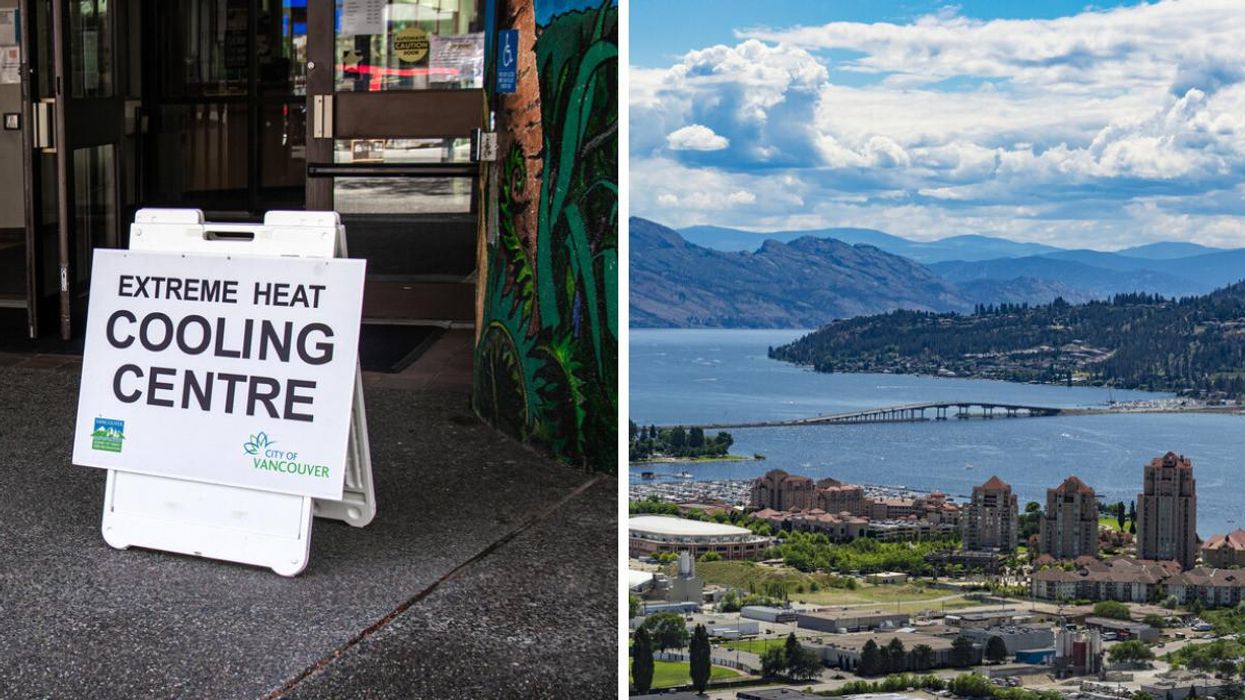
City of Vancouver sign for extreme heat cooling centre. Right: An aerial shot of Kelowna and the Okanagan Valley.
A recent report projected the areas in Canada that are at most risk when it comes to future heat waves — and one city in B.C. stood out.
After last year's heat dome in the province, which broke all-time Canadian heat records, and with the projection of an extremely hot summer to come, the reality of climate change is more clear than ever.
The Intact Centre on Climate Adaptation published the report on Wednesday, in which it outlined the areas of Canada likely to be the most exposed to extreme heat from 2051 to 2080.
It also illustrated the measures people in the areas are going to have to take to deal with the extreme heat.
Kelowna, B.C., is projected to be the city in Canada that will face the hottest temperatures.
It is also projected to be the city with the longest-lasting heat waves in the country.
The report said that while big cities are hot spots for global warming, there are three “red zones” in Canada that "will be hardest hit by extreme heat."
The three zones are the "valleys between the West Coast and the Rocky Mountains in B.C., prairie communities bordering the U.S, and north of Lake Erie through the St. Lawrence River Valley in Ontario and Quebec."
Kelowna also ranked in the top 10 metropolitan areas that are projected to be most exposed to extreme heat, the report said.
According to the report, smaller communities expected to be exposed in B.C. are Kamloops, Penticton, Vernon and Creston.
The managing director of Climate Resilient Infrastructure, Joanna Eyquem, warned that if "an extreme-heat event coincided with an extended electricity outage — with no fans or air conditioning running — loss of life could easily jump to the thousands.”
The Intact Centre recommends three types of actions to reduce risks from extreme heat, including supporting vulnerable groups like the elderly, using nature to help keep cool and designing buildings that allow for passive cooling (which doesn't require electricity).
This article's cover image was used for illustrative purposes only.
- BC's 2022 Summer Weather Forecast Is Out & 'Blisteringly Hot ... ›
- Ontario Is Set To Have Some Of The Warmest Cities In Canada & Here's How Hot They'll Be - Narcity ›
- Vancouver's Weather Forecast Calls For Almost A Month's Worth Of Rain This Week - Narcity ›
- BC's Weather Forecast Calls For Up To 30 cm Of Snow This Weekend & It's Going To Be A Mess - Narcity ›
- Vancouver Has Strict New Rules To Follow When Watering Your Lawn & You Could Get Fined $250 - Narcity ›
- BC's New Interactive Maps Show What Areas Are Most Vulnerable To Climate Change - Narcity ›
- BC's Weather Forecast Calls For A 'Cool' Start To The Summer & A Shorter Wildfire Season - Narcity ›
- These Photos Show What Vancouver Will Look Like If Sea Levels Rise & So Much Is Under Water - Narcity ›